Get Full Government Meeting Transcripts, Videos, & Alerts Forever!
Get email alerts on the Land Use topic
No spam. Unsubscribe anytime.
Committee debates large-lot subdivision incentives and access rules ahead of council briefing
Summary
The committee reviewed proposals to allow individual driveway access for lots three acres or larger, neighbor notification improvements, graduated permit fees, and other incentives or disincentives for large-lot development; it directed staff to refine proposals and present recommendations to City Council on Oct. 13.
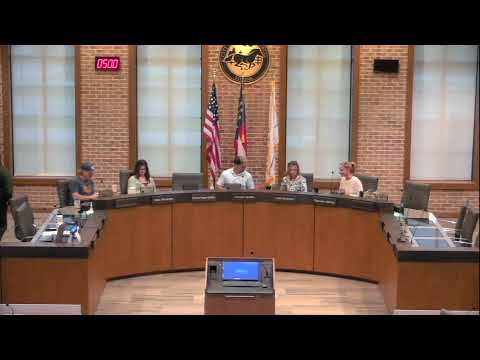
Diana Wheeler, a city staff member, reviewed a package of proposed incentives and regulatory changes aimed at large residential lots at the Municipal Events Committee meeting Sept. 17, 2025.
Wheeler told the committee the current code prevents increasing the number of driveway access points when a parcel is subdivided and described a proposed exception allowing “each large lot individual access” for new lots 3 acres or greater. She said the change would give property owners more flexibility for siting houses and could reduce total pavement in some layouts.
The proposal prompted extended discussion among committee members about visual impacts, tree preservation and development pressure. Committee member Mac Plummer and committee member Shannon Reagan Quidley questioned whether multiple new driveways would degrade the view from the road and make it easier for developers to subdivide large properties. One member said she favors keeping the existing restriction to avoid encouraging subdivision. Several members asked staff to gather local examples and investigate whether recent developments already reflect the proposed approach.
Wheeler also reviewed other proposals under consideration: requiring developers to provide neighbor notification packages for properties within 500 feet (or a minimum of 775 residents), posting “coming soon” signs with a simple map, a graduated land-development permit fee tied to parcel size rather than only valuation, third‑party environmental reviews for subdivisions with 1‑acre lots, stronger bioretention and canopy goals (a stated baseline of retaining roughly 25% canopy when possible), and a potential requirement that small‑lot developments include sidewalks and gated entrances.
On impact fees, Wheeler explained these are governed by state law and are charged per house for transportation, parks and recreation, and public safety; she said the city collects roughly $11,000 per single‑family home in impact fees when a building permit is issued, so changing fee treatment by lot size would not alter that per‑house assessment.
The committee expressed support for some items and skepticism about others. Members generally favored stronger tree and buffer protections and were receptive to the idea of requiring sidewalks; a majority indicated support for adding front‑entrance gates to the recommendation list. Several members urged legal review before pursuing fee changes tied to parcel count. The committee asked staff to prepare examples and clarifications on how existing subdivisions obtained multiple driveways and to return with additional analysis.
Resident Greg Raskin, who said he owns 6.5 acres in Milton, criticized the package as unlikely to preserve large lots and urged the committee to consider stronger, creative incentives to reward long‑term large‑lot owners rather than primarily imposing hurdles on developers. “I find myself frustrated…there’s no incentive,” Raskin said, urging options such as a tax‑related preservation fund or other long‑term rewards for owners who keep large parcels intact.
Wheeler told the committee she will consolidate the recommendations and planned code amendments and present them at a City Council work session on Oct. 13, 2025. The committee directed staff to provide concrete examples, sample neighbor‑notice language, permit‑fee ranges, and legal guidance on any fee changes before council presentation.
The committee did not adopt ordinance language or take a formal vote on code changes; members described next steps as staff research and a council briefing.