Get Full Government Meeting Transcripts, Videos, & Alerts Forever!
Get email alerts on the Data Centers topic
No spam. Unsubscribe anytime.
LaSalle County staff proposes text amendment to regulate data centers; board flags water, noise and setbacks
Summary
County land‑use staff proposed adding data centers as a special use in A‑1 and industrial districts and suggested conditions addressing setbacks, screening, backup generators, noise limits and water‑use monitoring; board members requested further review and possible referral to Land Use Committee.
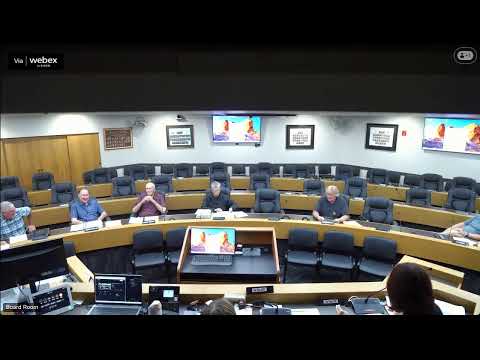
LaSalle County land use staff told the Zoning Board of Appeals on Sept. 17 that the county should add data centers to the zoning ordinance as a special use in A‑1 and industrial districts and include conditions addressing setbacks, screening, backup generators, noise and groundwater monitoring.
"I think it's time to probably add that as a as a special use in the a 1 and industrial districts, and then have that ready with conditions," Land Use Director Brian Gift said, adding he used language drawn from Sangamon County as a starting point.
Gift said a draft could address setbacks to occupied residences, screening for backup generators and a noise ceiling at property lines tied to Illinois Pollution Control Board requirements. He recommended consultation with road districts, EcoCAT, state preservation and fish and wildlife reviews, and a plan to monitor impacts to surrounding wells if high‑capacity groundwater is proposed for cooling. "If it proposes high capacity wells for cooling that it, you have a monitoring plan as well as a, basically, to monitor the impact to, surrounding wells and groundwater," Gift said.
Board members asked about scale and typical size of facilities; Gift said the current local interest is for smaller, "last‑mile" data centers rather than massive machine‑learning campuses. "This would be more of, like, the last mile computing. So it wouldn't be, like, the learning ones. It would just be kind of, closer to the the users, which are kind of small like, smaller versions, maybe multiple, but but smaller data centers," he said. He estimated some proposals could occupy up to 100 acres with multiple buildings, depending on the site and design.
Members raised concerns about building height, fencing, generators that operate continuously rather than as backups, and the water and electric demands of data centers. Gift recommended leaving some site‑specific flexibility while establishing baseline standards in the ordinance so the county has consistent review criteria rather than ad hoc decisions.
Gift said the county could bring a draft to the Land Use Committee for review next month, with potential publication and hearings in late fall; he noted state work on data‑center guidance is expected in October. The board suggested staff collect example language from other counties and return with a draft ordinance for committee consideration.