Get Full Government Meeting Transcripts, Videos, & Alerts Forever!
Get email alerts on the Statute Of Limitations topic
No spam. Unsubscribe anytime.
Judge signals grant of plea in bar in Kennerly case over amended accusation beyond limitations period
Summary
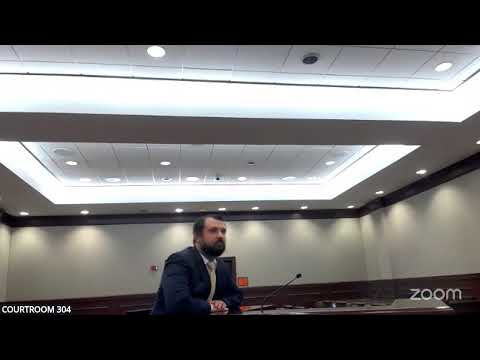
In a contested pretrial hearing, Judge Tammy Long Hayward indicated she would grant a plea in bar for defendant Manuel Kennerly after defense argued the state amended a fatally flawed accusation after the statute of limitations had run; order to be prepared by defense counsel.
Judge Tammy Long Hayward said she was inclined to grant a plea in bar in the case State v. Manuel Kennerly after defense counsel argued prosecutors amended a 2021 accusation that earlier used the phrase "said offender" rather than naming a victim, and that the amendment was made after the statute of limitations had run.
The hearing turned on whether the amended accusation simply corrected a typographical error or materially altered the original charge. Defense attorney Byron Morgan told the court the original accusations language meant the defendant was never charged with an offense that named a victim, so the statute of limitations had run; he cited Thomas v. State (1998) to support that an amendment cannot substitute essential elements after limitations have expired. The state, represented by Charles Brooks, invoked OCGA 17-7-71 and argued the amendment made the accusation "more succinct" and therefore permissible; Brooks also cited a Court of Appeals decision the state identified as "Barghee v. State" (334 Ga. 409, 2015) in support.
Judge Hayward said the original filings were "fatally flawed" and that the legal issue is whether the later amendment broadened the charge beyond what the law allows after the statute of limitations. After hearing argument, she said she was "inclined to grant the plea in bar," asked defense counsel to prepare an order, and set a timeline for filing.
Why it matters: A plea in bar based on statute‑of‑limitations and defective accusation language effectively prevents the state from retrying the same charges. The judge's tentative ruling, if entered in an order, will end the prosecution unless the state successfully appeals or the order is vacated.
Key facts and law discussed: Morgan said the original accusation filed in September 2021 listed four counts each referring to "said offender" and never named a victim; the state later amended to name "Tanya Soden," according to defense counsel. Defense counsel argued that substitution of a named victim after limitations expired changes a material element, not a typographical correction. The prosecutor cited OCGA 17‑7‑71(f) (the state may amend accusations when they arise from the same conduct) and argued precedent allows correction when the amendment makes the accusation sufficient to be tried.
Decision and next steps: The judge directed Mr. Morgan to prepare a formal order reflecting the court's disposition. The written order will state whether the plea in bar is granted and will be the operative court action; the transcript shows the judge asked counsel to provide the order the same day.
Ending: The court's oral inclination to grant the plea in bar resolves a long, contested pretrial dispute unless the state seeks further relief; counsel must prepare and submit the controlling written order.