
Fargo housing authority warns voucher funding shortfall; could stop issuing new vouchers
Get AI-powered insights, summaries, and transcripts
Subscribe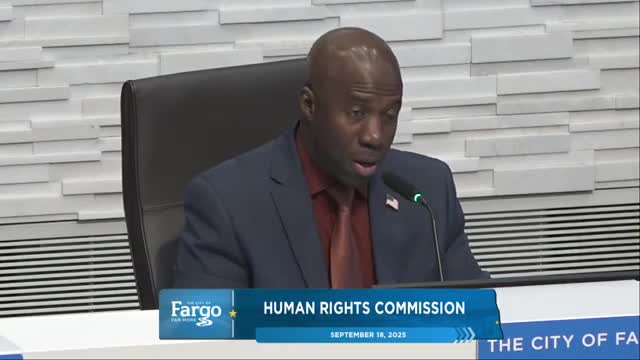
Summary
The Fargo Housing and Redevelopment Authority told the Human Rights Commission it is overspending voucher appropriations, faces reserve depletion and may stop issuing new vouchers if Congress does not increase HUD funding.
Chris Brongart, chief executive officer of Fargo Housing, briefed the Human Rights Commission Sept. 18 on the agency’s programs and a looming funding gap. “We’re currently spending about 103% of our appropriations from the federal government for our vouchers,” Brongart said, adding the authority is drawing down reserves and is concerned about maintaining assistance if funding remains flat.
Brongart said the authority administers roughly 2,000 Section 8 vouchers and owns or manages about 204 public‑housing units, plus scattered single‑family properties across Fargo. He said some public‑housing redevelopment is underway — including plans to replace an older high‑rise with about 110 units — and the authority is converting several aging scattered units into larger, more efficient apartment buildings.
On locating federally funded housing, Brongart said environmental‑review requirements under the National Environmental Policy Act require agencies to review “concentration of poverty” and will not permit federal funds in locations that could increase such concentration.
Commissioners pressed Brongart on the voucher wait list and program eligibility. He said the authority currently has a wait list of about 600 households, that public‑housing and voucher programs have different income‑limit bands, and that the authority applies HUD‑mandated criminal‑background rules (including immediate denial for lifetime sex offenders and meth manufacturing in public housing). He described a portfolio of specialized vouchers — veterans, mainstream disability vouchers and project‑based vouchers for particular affordable developments.
Brongart gave figures on the agency’s monthly spending on subsidies and reserves. He said the authority “puts out about $12,000,000 — about a million dollars a month in subsidies” and that its reserves were roughly $750,000; he warned that with flat federal funding the agency may have to stop issuing new vouchers and rely on attrition to avoid removing current participants.
Commissioners asked about prioritization on the wait list for seniors, people with disabilities and local residents; Brongart said the authority uses a points system to assign preference categories and that preference “jumps” would raise fair‑housing concerns. Commissioners suggested a community housing‑day forum to coordinate partners; Brongart endorsed further collaboration.
The authority did not seek any formal action at the meeting. Brongart agreed to answer follow‑up questions from commissioners and to provide more detailed numbers on voucher spending and wait‑list timelines upon request.