Get Full Government Meeting Transcripts, Videos, & Alerts Forever!
Get email alerts on the Tax Exemption Zone topic
No spam. Unsubscribe anytime.
Munhall holds public hearing on tax-exemption zone; council will set boundaries and schedule later
Summary
Munhall Borough held a public hearing on ordinances that would allow tax exemptions for redevelopment in designated deteriorated areas and for new-home construction. Council heard public comment and a staff summary but did not adopt the ordinance tonight; next steps include finalizing the map and sending a draft to the Allegheny County Planning
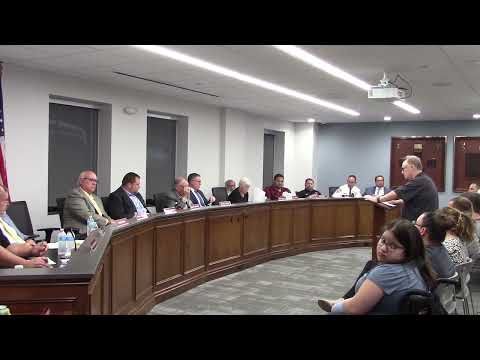
Munhall Borough held a public hearing on Sept. 16 on an ordinance to establish a tax-exemption zone and related schedules that would allow property tax exemptions for improvements in designated deteriorated areas and for certain new-home construction. Borough officials said the council must decide whether to apply the exemption to the entire borough or to a smaller area and to set the exemption schedule before any ordinance can be adopted.
The hearing matters because the zoning and schedule determine which properties would qualify and for how long. Borough staff said the proposed ordinance draws on Pennsylvania statutory authorities and a planning commission recommendation that the entire borough be treated as a distressed area; council members and some residents urged caution and asked for more time to review details.
In a summary for council, the borough solicitor explained that state law limits some exemptions. "Some of these Pennsylvania statutes I've already recited, call for a maximum of a 10 year exemption," the solicitor said during the hearing, and added that the statutory regime for new-home construction limits exemptions on unimproved residential lots to two years. The solicitor described factors in the ordinance’s definition of a "deteriorated area," including vacant or overgrown parcels, a disproportionate number of tax-delinquent properties, unsanitary or overcrowded buildings and other conditions enumerated in the draft ordinance.
Residents at the hearing urged council to use the tool for redevelopment and to consider protections. "This LERDA ordinance has been the top of my priority list recently and I just would encourage council to think along the terms of the bigger picture of this ordinance, bringing in development to our community," said resident Brad Dachega, who identified his address as 1332 Margaret Street. Another resident, Bill Randall, asked whether designating the entire borough as distressed would affect the borough's bond rating.
Council did not adopt the ordinance at the meeting. The solicitor said the council must first decide the geographic boundary and the exemption schedule; after that the draft ordinance will be sent to the Allegheny County Planning Department for a statutorily required 45-day review before final adoption and advertising. "Once counsel decides on a ... ordinance, I have to send it to the Allegheny County Planning Department for 45 day review. Then we can advertise and then vote to adopt it," the solicitor said.
Discussion vs. decision: the session was a public hearing required by statute; the council received public comment and staff summary but took no final vote to adopt a LERTA-style ordinance. The solicitor and staff repeatedly emphasized that the public hearing is the required first step and that council would decide the area and schedule at a later meeting.
Next steps: council must determine (1) whether to designate the entire borough or a smaller area as the deteriorated area and (2) the exemption schedule (examples cited included graduated percentages over up to 10 years). After those decisions the solicitor will finalize ordinance language, submit it to the county planning office for 45-day review and then the council may advertise and vote on adoption. No effective dates or final schedule were set at the Sept. 16 meeting.