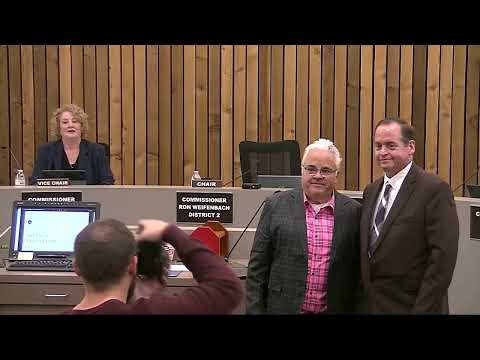
Pennington County commissioners approve $304,004 design-assist amendment as jail expansion debate continues
Loading...
Summary
Commissioners approved a $304,004 guaranteed-maximum-price amendment for preconstruction and design-assist work on a proposed jail tower, but long-running disagreement over project scope, funding and timing left major decisions about bonding and capacity unresolved.
Pennington County commissioners voted Sept. 16 to approve a $304,004.69 guaranteed-maximum-price amendment with Skoll Construction Services for additional preconstruction and design-assist services tied to the proposed jail expansion. The action funds work the county says is necessary to produce 100% construction documents and complete design-assist tasks so the project can advance to a permitted build phase. Commissioners approved the amendment after a divisive discussion about the broader project cost, bonding approach and whether the county should move forward now or refine plans and funding. The approved amendment covers construction management-at-risk preconstruction and design-assist fees Skoll says were not included in its original estimate for earlier, smaller-scope designs. The project as presented to the board includes infrastructure and remodel work on the 1989 jail and annex (about $30–35 million) plus a new tower option (Option B: ~296 beds) with a total project cost that county staff estimated at roughly $122 to $126 million depending on final scope. Pennington County Buildings and Grounds director Davis Purcell told commissioners the new tower and infrastructure work together would require roughly 40 months of construction for the tower and additional time to complete the infrastructure and inmate moves. Tom Grama of Colliers joined staff in explaining the bond scenarios presented to the board: a 30-year bond payment for Option B that would add roughly $6.48 million per year in debt service and increase the county levy by about $0.41 per $1,000 of assessed value (about $124 per year on a $300,000 home). Option C (with shelled floors added) raised the projected levy impact to about $0.45 per $1,000. Commissioners and staff walked through financing options, including general obligation bonds (which require a public vote) and lease-purchase (limited-tax) bonds that the county has used in past capital projects. Bond counsel explained general obligation bonds are unlimited-tax obligations, while lease-purchase instruments are limited-tax up to statutory limits and (under state rules and recent court uncertainty) have been interpreted to require either a 4-1 county vote or be subject to potential referral by petition. Commissioners asked about interest-rate assumptions; staff summarized current market yields near 4.7–4.9% for the sample long-term bonds used in the analysis. Several commissioners and the sheriff emphasized the project addresses an urgent infrastructure need — the county has operated at or above its facility capacity for years, staff said — and the county risks losing federal inmate revenue if infrastructure work displaces beds. Opponents urged more time for planning and clearer answers about long-term funding and whether the community should be asked to vote on a general obligation bond. Commissioner Jerry Durr (chair) moved to authorize the GMP amendment; the motion was seconded and carried. Separately, commissioners later approved a draft financing worksheet and asked staff to prepare clearer, updated budget impacts and contingency scenarios for a follow-up special meeting. County staff recommended the board use the next few weeks to refine the budget, confirm potential partner contributions, and return with a single recommended financing strategy and a more detailed timeline for construction so the board and public can evaluate how the county would pay debt service and how potential partner participation (city, neighboring counties, federal reimbursement for federal inmates) would reduce levy impacts. The project drew substantial commissioner comment: some called for immediate action to avoid escalating construction costs, while others urged a public vote or additional hearings before asking taxpayers to pay higher levies. The board scheduled a special budget meeting Sept. 19 to continue discussion and to ask staff for a clarified list of questions and answers before taking further votes. What’s next: staff will refine cost estimates, run bond sizing and levy-impact options, and return to the board with updated financing scenarios and a clear list of policy decisions the commission must make before any bond authorization or public vote.