Get Full Government Meeting Transcripts, Videos, & Alerts Forever!
Get email alerts on the Zoning Housing Policy topic
No spam. Unsubscribe anytime.
Council approves housing code changes that shift some multifamily projects from conditional to permitted uses
Summary
The council approved amendments to Title 15 that make multifamily dwellings permitted (rather than conditional) in several commercial zoning districts; the measure passed 6–3 after public comment citing loss of public process.
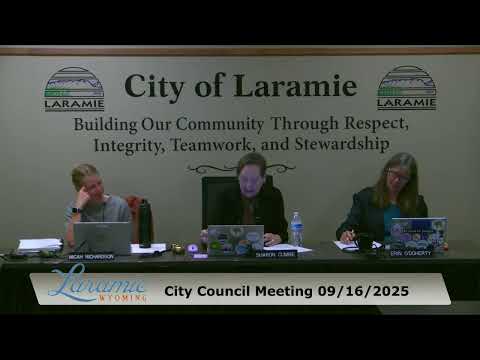
Laramie — The City Council on Sept. 16 adopted amendments to multiple sections of Title 15 of the Laramie Municipal Code intended to streamline housing development, including a change that makes certain multifamily residential uses permitted rather than conditional in several commercial zoning districts.
Director Taney, presenting the second reading, said the changes are intended to “make the path easier for housing” and align zoning allowed uses with the city’s housing initiatives and comprehensive plan. “If they meet our code requirements, then they may be more willing to invest in a property,” Taney said.
Multiple public commenters urged caution. Ryan Shields, a Grandview Heights resident, asked council to retain case-by-case review for multifamily development adjacent to single-family homes. “Changing the rules now — eliminating transparency in government — is not a best practice,” Shields said during the public hearing.
The ordinance removes the conditional-use requirement for multifamily uses in several commercial zones including the B‑1 and B‑2 zoning districts and C‑2, making them permitted by-right in those zones. Council asked staff for details on height limits; staff said B‑1 allows up to 50 feet and B‑2 up to 65 feet, and noted the R‑3 multifamily district also has a 50‑foot maximum in many cases.
Supporters on council framed the change as a tool to increase housing supply and predictability for developers; opponents argued it removes an important public-notice and review step. Council votes reflected the split: 6–3 in favor with Councilors O'Doherty, Bowling, Reid, Beheel, Richardson and Temby voting yes and Councilors Conway, Lockhart and Newman voting no.
Director Taney and council members noted the change affects process rather than prohibiting multifamily development — conditional use remains an option in many places — and that height, parking and other code standards still apply. Taney also reminded council that amendments could be made at third reading or future sessions if members wanted to alter specific sections rather than reject the entire ordinance.
The ordinance was approved on second reading Sept. 16 and councilors discussed possible additional public input ahead of final action.