Get Full Government Meeting Transcripts, Videos, & Alerts Forever!
Get email alerts on the Elevate Capital Program topic
No spam. Unsubscribe anytime.
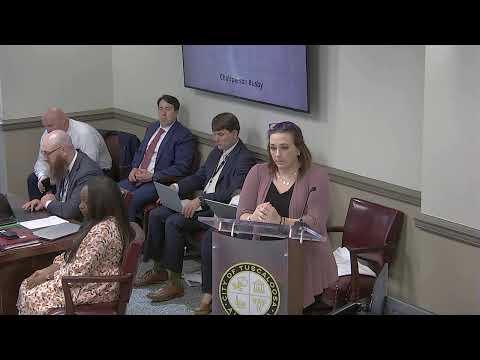
Committee reviews Elevate capital plan: $37.6 million revenue picture and sequencing for Greensboro, Riverwalk, terminal projects
Summary
Staff briefed the committee on the Elevate capital program, projecting $37.6 million in FY2026 revenue primarily from an extra 1¢ sales tax adopted in 2019, and outlined project sequencing and financing options for Greensboro Avenue, Northern Riverwalk, terminal upgrades and other projects.
City staff told the finance committee that the Elevate program plans $37.6 million in revenue next year and outlined how that money is expected to flow to projects, debt service and operating set‑asides.
Project managers said the revenue projection is driven mainly by the extra 1¢ sales-and-use tax adopted in 2019 and that the total includes previous carryforwards and savings‑center capital campaign receipts. Staff said after specified transfers (including a recurring $5 million environmental service transfer) net Elevate funding available for projects will be lower and that sequencing and cash flow decisions will determine whether the city issues debt early or uses cash to start projects.
Mister Moore, staff member on Elevate projects, described major projects likely to move forward in 2026: Greensboro Avenue (100% plans ready and planned for a post‑graduation construction window), Northern Riverwalk phase 2, terminal improvements (a $13 million item discussed elsewhere), Freeman Park and Pool (a newly highlighted project), and MLK phase 3 (contingent on TIGER-like reimbursements). Staff flagged Bowers Park and other previously authorized projects and said the city has an Elevate contingency of about $5.2 million for the year.
Staff outlined how the Elevate revenue is allocated: roughly $27 million from the dedicated tax, about $4.3 million tied to the savings center capital campaign, and $6.2 million in carryforwards to reach the $37.6 million total. Elevate set‑asides described included a five‑million‑dollar per‑year environmental services transfer, a 20% public‑safety set‑aside that flows to the public‑safety fund for pay‑plan and RSA conversion, a 15% operations-and‑maintenance reserve for completed projects, and multiple debt‑service obligations for earlier bond issues. Staff said the public‑safety set‑aside is taken from the sales tax net of the environmental transfer and that some Elevate funds already support agency funding (transit, school programs, athletics) separate from the $14 million of general‑fund agency funding discussed elsewhere.
Committee members asked whether the stipend addendum for employees could be funded from the Elevate public‑safety portion; staff said it could theoretically be done but that standards and practice may differ and they did not recommend that as their preferred option. Staff also described the mechanics of loan/LOC and bond issuance for Noah’s Ark 2 and other projects: RFQs for banks, vetting, and an estimated one to one-and-a-half months after approval before cash would be available if the council authorizes financing.
Staff said the Greensboro Avenue project could be bid in March to be ready to start immediately after University of Alabama graduation, with substantial work completed during a summer construction window to limit disruption to campus events. The committee did not take a financing vote at the meeting; staff said detailed timing and sequencing decisions will return to the council in the fall when cash‑flow and bond‑market timing are clearer.