Get Full Government Meeting Transcripts, Videos, & Alerts Forever!
Get email alerts on the Child Welfare Active Efforts topic
No spam. Unsubscribe anytime.
New Minnesota 'active efforts' standard will add staff time and costs, Pine County social‑services leaders say
Summary
Pine County Health & Human Services staff told commissioners that implementation of Minnesota's new active‑efforts law will significantly increase casework time and program costs, and that the county needs more staff and funding to meet the requirement that goes into effect Jan. 1, 2027.
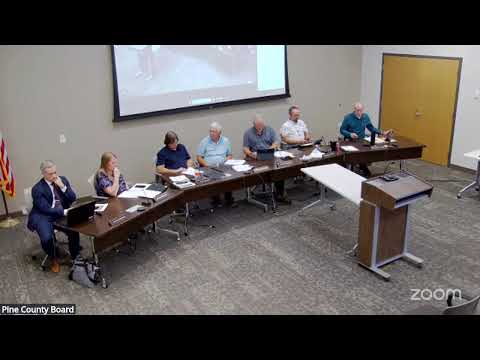
Pine County Health & Human Services officials told the county board that a new state law requiring "active efforts" in child‑welfare cases will sharply increase workload and costs for local child‑protection staff. Becky Fossum, Pine County health and human services director, said the statute'referred to in presentations as "MAPPA CWDA" (Minnesota African American Family Preservation and Child Welfare Disproportionality Act)'takes effect Jan. 1, 2027, and parallels the higher‑standard approach used under the federal Indian Child Welfare Act. The county's child‑protection supervisors and social workers described case examples to illustrate the scale of the work. Child protection supervisor Beth Jarvis and child social worker Britney Vogland described one ICWA‑covered case that has produced roughly $350,000 in placement and service costs over four and a half years and multiple out‑of‑county visits. "We paid for taxi transportation for a single visit that cost more than $1,000," Vogland said, describing efforts to maintain parent‑child contact while a parent was in treatment. Fossum and her team urged the board to budget for more staff and administrative support. "This will take a lot of resources in terms of staff time and financial resources for services," Fossum said. She said the county's in‑house fiscal assessment identified the need for an additional child‑protection supervisor and administrative support if the county must meet the active‑efforts standard across a broader set of families. Commissioners asked whether other counties already implementing the standard have had success; staff said they were tracking early adopters but had not seen a clear, scalable model that produced cost savings locally. Jarvis warned that active‑efforts cases demand far more caseworker time: she said a single recent reasonable‑efforts case required 255 staff hours in three months. "That's an average of almost 20 hours a week for one case," she said. The department said those hours would likely increase under an active‑efforts standard. The presentation included policy concerns raised by commission members about the limits of county authority to solve deep socioeconomic drivers of child welfare involvement and the fiscal realism of funding a higher standard without state support. Fossum recommended the board pursue state partnerships and urged legislators to fund implementation if they expect counties to meet the new requirements. No formal action was taken; the item was presented for information and discussion.