Get Full Government Meeting Transcripts, Videos, & Alerts Forever!
Get email alerts on the Criminal Court Dispositions topic
No spam. Unsubscribe anytime.
Clayton County judge imposes jail terms, probation conditions and suspended fines in arraignment and jail calendar
Summary
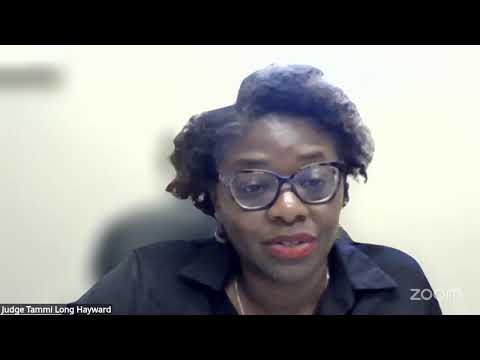
Judge Tammy Long Hayward resolved the Sept. 16, 2025 arraignment and jail calendars in Clayton County State Court, issuing custodial sentences in several probation-revocation matters, accepting no-contest and no‑lo pleas in multiple misdemeanor and traffic cases, and ordering counseling, no-contact terms and fine schedules for others.
Judge Tammy Long Hayward on Sept. 16, 2025 disposed of the State Court’s arraignment and jail calendars, issuing custodial sentences in several probation‑revocation cases and accepting pleas that included suspended fines and probation conditions for a range of traffic and misdemeanor matters.
The most significant disposition came in a probation revocation for Gerard Clifton Williams, who the court found had repeatedly failed to comply with probation requirements, tested positive for alcohol and accumulated $2,860 in unpaid fines and fees. After hearing probation and state recommendations, Hayward ordered Williams to serve 12 months in jail, with credit for time already served; the state told the court it would consider release to an inpatient treatment facility if he qualified. Probation presented records showing missed reporting dates and uncompleted programs; the judge said she had given Williams repeated chances and concluded a custodial term was necessary.
Other custodial outcomes on the jail calendar included a 90‑day jail term for Johnny Lamont Eubanks to resolve a theft/shoplifting probation revocation (credit given for 23 days already served) and a 30‑day jail term imposed in a separate probation revocation for Brandon Lanier Turner, with credit for time served and a return to probation after the custodial period. In each case probation officers and defense counsel discussed missed reporting, unpaid fines and missed treatment or program requirements before the judge announced the sentences.
The court also accepted pleas and entered dispositions in a number of misdemeanor and traffic matters during the arraignment calendar. Examples recorded on the record included: - Kareem Mohammed Redd, charged with a truck‑lane violation on July 29, 2022, entered a plea of no contest (NOLO). The state had recommended a $150 fine (about $242 with surcharges); the judge accepted a NOLO and suspended the fine subject to the defendant’s compliance as explained on the record. - Errol Liddell Jones entered a NOLO plea to driving on a suspended license; the state recommended a $500 fine. Jones was given up to 60 days to pay and was sent information by courthouse staff on how to pay online or in person. - Kadarius Rashad Carter pleaded guilty to speeding 31–34 mph over the limit; the court credited him 30 days for time served and suspended the balance of a 12‑month sentence, resolving that case on the calendar. - Zelandria Anita Henry entered NOLO pleas to two counts and a guilty plea on a remaining traffic count; the judge set a combined deadline (60 days) for payment of fines and ordered clerk staff to send payment instructions.
The court handled several cases involving alleged drug paraphernalia and loitering or soliciting. Ismaeli Perez entered NOLO pleas to soliciting and possession of drug paraphernalia; the state recommended 12 months with 2 days to serve on the soliciting charge and a suspended $200 fine on the drug‑object charge. Jessica Speaks pleaded NOLO to loitering/prowling and drug‑object counts; the judge accepted pleas and imposed a 12‑month sentence with 37 days credit for time served and a suspended balance if she avoided the incident location and had no new criminal violations.
In family‑violence matters the court accepted negotiated pleas and ordered fines and program requirements. Alfredo Vasquez pled guilty or NOLO on related charges arising from two separate incidents; the judge ordered concurrent fines, no contact with the victim and completion of a 24‑week Family Violence Intervention Program under the court’s probation terms. The court’s written dispositions set fines and the FVIP requirement as conditions of probation.
Throughout the calendars the judge repeatedly emphasized that probationers who fail to report, miss treatment or otherwise do not comply with special conditions risk custody. Hayward also advised defendants with substance‑use disorders about treatment options and, in some instances, that the state would consider inpatient placement if appropriate and available.
Court staff and the state informed several defendants how to obtain copies of court orders and pay fines: the clerk’s office will email sentencing sheets and payment instructions (defendants were told to check spam folders if they did not see messages). Several cases were continued, set for trial calendars at defendants’ request, or resolved with credit for time already served in custody.
The dispositions reported here reflect the on‑the‑record actions that Judge Tammy Long Hayward announced on Sept. 16, 2025. Detailed case numbers, fines, and program conditions were recorded on the record for each defendant and will be reflected in the clerk’s filed orders.