Get Full Government Meeting Transcripts, Videos, & Alerts Forever!
Get email alerts on the Mobile Integrated Health topic
No spam. Unsubscribe anytime.
Kirkland Fire’s mobile integrated health team reports large drops in 911 and ER use; seeks outside funding to keep staffing
Summary
Kirkland Fire’s MIH team said a 2024 internal analysis showed an approximate 82% drop in repeat 911 calls and an 81% drop in emergency‑department visits after outreach, and staff requested outside levy funding and partnerships to keep a second firefighter EMT and add a social worker.
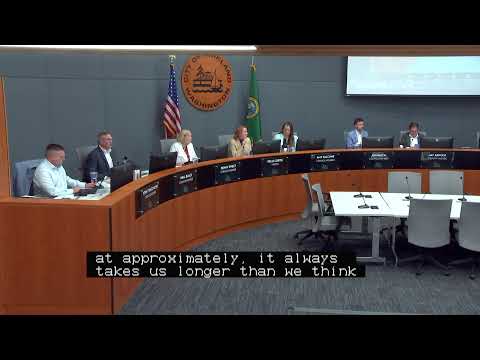
Kirkland Fire Department’s mobile integrated health (MIH) team briefed the City Council Sept. 16 on program results for 2024 and requested outside funding to preserve current capacity and expand services.
Taryn Robinson, the MIH social-work coordinator, told council the program currently operates with three core staff — herself and two firefighter‑EMTs — and is funded through the King County BLS levy. “We operate as primarily a referral based model,” Robinson said, describing how the unit takes referrals from first responders after 9‑1‑1 incidents and then does outreach, usually within 24–72 hours.
Why it matters: The MIH model aims to reduce unnecessary emergency medical system use, link high‑need residents to housing and health services, and reduce downstream costs and harm from repeated 9‑1‑1 and emergency‑department visits.
Program impacts and statistics: Robinson told the council the MIH program analyzed client contact windows before and after interventions in 2024 and found sharp reductions in acute system use. “9 1 1 calls decreased by approximately 82%, and emergency department visits decreased by 81%,” Robinson said, citing an internal 2024 snapshot comparing a one‑month interval prior to outreach with outcomes at case closure.
Staffing and workload: Robinson said the program currently spends substantial time on moderate and intensive care coordination: about 30% of clients require episodic care (a few contacts), more than half require six weeks to six months of follow‑up, and nearly 20% require six months or more. She said a sustained increase in demand and an anticipated funding reduction under a new King County levy allocation could reduce the MIH team to a single social worker and a single firefighter‑EMT unless new funding is secured.
Request for outside funds and partnerships: The MIH team has applied to the EvergreenHealth Hospital Levy program for calendar‑year 2026 funding to support maintaining the second firefighter EMT and adding a social‑work FTE, plus a second response vehicle. “The Evergreen Health Levy Committee approved the MIH program application to advance to the full board for consideration, which is convening this evening,” Robinson said; she told council the board was expected to make a decision shortly after the meeting.
Planned next steps and gaps identified: Robinson said the program is pursuing reimbursement and Medicaid/Medicare billing pathways, exploring registered‑nurse or intern workforce options, and building regional MIH partnerships. Shortfalls the team identified included lack of non‑EMS referral pathways (the current levy restricts MIH referrals to people who accessed 9‑1‑1) and limited hours of proactive availability. The team recommended expanding hours to weekdays during peak times and forming direct service partnerships with hospitals and homeless‑services providers.
Council response and follow-up: Council members praised the program’s outcomes and encouraged staff to continue pursuing EvergreenHealth funding and other revenue. Members urged clearer public guidance about when to call 9‑1‑1 versus alternative resources and asked staff to return with details on potential long‑term funding, program capacity and metrics for success.
Ending: Robinson reiterated the program’s goals to reduce avoidable emergency use and improve referrals into long‑term services. Council did not take formal action but asked the MIH team and city staff to continue pursuing EvergreenHealth funding and to return with cost/benefit estimates and operational plans should outside funds be awarded.