Get Full Government Meeting Transcripts, Videos, & Alerts Forever!
Get email alerts on the Medicaid Snap Federal Changes topic
No spam. Unsubscribe anytime.
Cook County officials briefed on federal changes to Medicaid and SNAP, timeline of local impacts through 2029
Summary
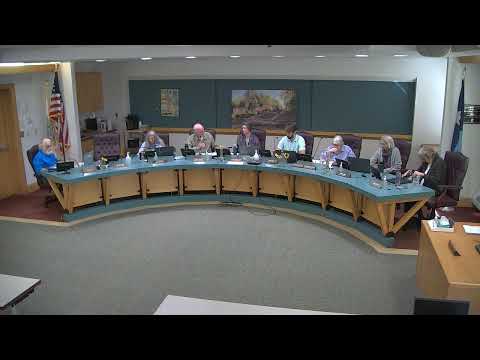
At a Sept. 16 meeting, Cook County Public Health Human Services (PHHS) staff briefed the board on federal changes to Medicaid and the Supplemental Nutrition Assistance Program (SNAP) enacted in a bill staff identified as 'House Resolution 1' and outlined which provisions will take effect through 2029 and how they may affect local services, county staff workload and providers.
At a Sept. 16 meeting, Cook County Public Health Human Services (PHHS) staff briefed the board on federal changes to Medicaid and the Supplemental Nutrition Assistance Program (SNAP) enacted in a bill staff identified as “House Resolution 1” and outlined which provisions will take effect through 2029 and how they may affect local services, county staff workload and providers.
The presentation, given to the Cook County Public Health Human Services Board by Grace (PHHS staff), focused on parts of the federal law that change who is eligible for benefits and how counties must administer them. Grace told the board, “the specific legislation that affects both Medicaid and the SNAP program, is House Resolution 1, which the President signed into law in July 2025.”
Why it matters: PHHS staff said the changes will increase administrative work for county eligibility staff, could reduce coverage for some residents, and may raise uncompensated care costs for local health providers. Many provisions phase in over several years; county staff urged the board to note the timeline when planning budgets.
Key federal changes summarized for the board
- More frequent Medicaid redeterminations: Beginning Jan. 1, 2027, certain adults ages 21–64 who are not disabled and do not have dependent children must complete eligibility redeterminations every six months instead of every 12 months. PHHS staff said Minnesota’s Department of Human Services (DHS) is still estimating county costs for additional redeterminations and that “recipients may lose coverage if they do not complete renewals on schedule.” (Grace, PHHS staff)
- Medicaid work requirements: Also effective Jan. 1, 2027 (with potential state extension requests), some adults will have to document 80 hours per month of “community engagement” (work, education, public service or a work program). Grace listed categories exempted from work requirements, including people who are pregnant, youth in foster care, American Indian tribal members, those considered medically frail and certain caregivers.
- Limits on retroactive Medicaid coverage: For most adults without children, retroactive coverage will be reduced (Grace read that retroactive coverage goes from three months to one month for many adults and from three months to two months for other eligibility groups). PHHS staff flagged a potential increase in uncompensated care if patients are billed for care that would previously have been covered retroactively.
- Cost sharing for some services: Effective Oct. 1, 2028, certain adults without children whose incomes exceed 100% of the federal poverty level may be required to pay up to $35 per service for certain medical services. Grace said federally qualified health center services, primary care, mental health and substance-use services are excluded; members of tribes are exempt from that cost sharing.
- Changes in eligibility for some lawful immigrants: Effective Oct. 1, 2026, Grace said the law would remove Medicaid eligibility for certain lawful immigrant adults in categories the speaker listed (refugees, humanitarian parolees, asylum grantees and some victims of abuse/trafficking).
SNAP changes described to the board
- Thrifty Food Plan reevaluation and benefit purchasing power: Grace explained the Thrifty Food Plan (the federal cost estimate used to set SNAP benefit amounts) will be reevaluated; federal guidance requires cost-neutral adjustments, which staff said could reduce SNAP purchasing power over time. The earliest change mentioned is Oct. 1, 2027.
- SNAP work requirements: Federal guidance updating the definition of “able-bodied adults without dependents” will require 80 hours per month of work or a work program for some people; Grace said the timing is “as soon as federal guidance is available.” She also said some previously exempt groups (for example, veterans and people experiencing homelessness) may no longer be exempt.
- Administrative cost sharing and funding changes: Effective Oct. 1, 2026, the federal reimbursement for state SNAP administrative costs is changing from 50% to 25%, increasing state- and county-level financial responsibility for running the program.
- Noncitizen SNAP eligibility restrictions and SNAP-Ed funding changes: Grace said one federal change will restrict eligibility for certain noncitizens as USDA guidance is released, and that SNAP-Ed (a nutrition education program) funding was eliminated effective Oct. 1 (Grace said the region recently lost a University of Minnesota Extension staff member who had served as a regional SNAP-Ed representative; Grand Portage band leadership reported they obtained local funding to continue services on the reservation).
- Payment error–rate penalties: Grace explained a new federal regime will financially penalize states with high payment error rates for SNAP and Medicaid — for SNAP the change takes effect Oct. 1, 2027, with states paying a tiered share of benefit costs based on error rates; for Medicaid the effective date called out was Oct. 1, 2029, with penalties tied to a threshold (Grace cited “over 3%” for Medicaid payment errors in available federal materials).
Local concerns and next steps
PHHS staff emphasized uncertainty about the local fiscal and administrative impact. Dagmarah Smith, economic assistance supervisor, joined the presentation and responded to questions about county SNAP and eligibility administration, including error-rate monitoring, system modernization and staffing. Commissioner Testeralli asked about error-rate oversight and fairness; Smith said statewide error-rate evaluations are ongoing, that Minnesota’s statewide SNAP error rate “is over 10%,” and that the state is “still at the discovery phase” about implementation and potential waivers.
PHHS staff recommended that the board note the implementation timeline — some changes begin in 2026 and 2027 and others (notably the Medicaid payment-error penalties) do not phase in until 2029 — and consider those dates when planning budgets and staffing.
Closing: PHHS staff said they will circulate the slides and reference links used for the presentation and that county departments will continue monitoring state and federal guidance as rules and implementation details become available.