Get Full Government Meeting Transcripts, Videos, & Alerts Forever!
Get email alerts on the School Board Conduct topic
No spam. Unsubscribe anytime.
Residents call for resignation of school board member after social‑media post labeling slain man a "Nazi"
Summary
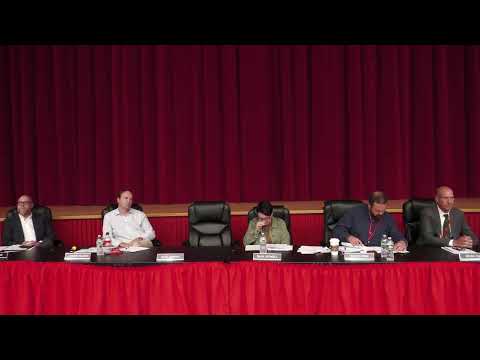
Dozens of residents used public comment at a South Orangetown Central School District board meeting to demand the resignation of board member Jay Savage after he posted a message calling Charlie Kirk a “Nazi” following Kirk’s assassination.
Dozens of residents used public comment at a South Orangetown Central School District board meeting to demand the resignation of board member Jay Savage after he posted a message calling Charlie Kirk a “Nazi” following Kirk’s assassination.
Speakers said Savage’s post crossed a line for an elected school official who helps set curriculum and represent students. “You have a responsibility to say, ‘I've done the wrong thing,’” Deborah Trainor, an occupational therapist and district graduate, told the board. “Is there a code of conduct that the board has to sign to be on the — and he knew that when he got sworn in.”
The controversy drew sustained public comment and visible emotion. Several residents said Savage’s wording was inflammatory and incompatible with the district’s stated mission to “elevate, engage, and inspire” students. One commenter said Savage’s post “teaches children that hate is okay.” Another urged the board to begin removal proceedings, citing prior, similar incidents that resulted in a resignation last year.
Superintendent remarks at the meeting framed the legal and institutional limits on the district’s response. The superintendent said, “No one told this individual that they couldn't post that thing. He had the right to make the post,” and added that while the post is protected speech, “everyone can have… whatever reaction they want to that speech and take whatever action they want accordingly.” The superintendent also said the district had received “about 100 emails” raising the issue and emphasized the board’s duty to focus on students.
Public commenters and several speakers referenced standards of conduct for public officials. One speaker cited guidance from the New York State School Boards Association, arguing that public officials “are expected to uphold a higher standard of conduct than the general public.” Several speakers said they saw Savage’s post as undermining trust in his ability to serve impartially on curricular matters.
Not all remarks were uniform in tone; some speakers called for civic healing and urged the community to work past division. Multiple speakers noted that while free‑speech protections limit what government can penalize, public consequences and political accountability remain possible. At least one person who addressed the board warned that, if the board did not act, the community would remember the decision at reelection.
No formal motion to censure or remove Savage was recorded in the public comments captured in the transcript. During the meeting the superintendent said they consult with legal counsel on such matters; the transcript did not show the board taking an official vote or announcing a timetable for any personnel or disciplinary proceedings.
Background and context: Commenters repeatedly linked the dispute to the board member’s role on curriculum committees and to the district’s mission and values. Several speakers said the post had diverted attention and energy from schools’ work and that the controversy had been raised previously in the district. Commenters also mentioned a separate, earlier resignation over related controversies last year.
What happens next is unclear from the meeting record: speakers pushed for removal or resignation, the superintendent noted legal limits on removing private‑speech posts, and the board did not take formal action on the record during the portion of the meeting covered by the transcript.
Ending: The meeting’s public comment period ended with residents continuing to press for a concrete board response; the transcript does not show a final board decision or an announced process for addressing the complaints.