
JLARC begins review of Labor & Industries enforcement of laws affecting farm workers
Get AI-powered insights, summaries, and transcripts
Subscribe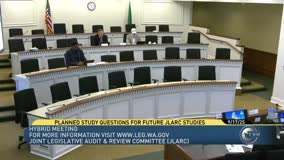
Summary
JLARC staff outlined planned study questions for a review of Department of Labor & Industries enforcement of wage, hour, health and safety, and anti-retaliation laws affecting farm workers; staff will examine processes, efficiency, and equitable access and noted ambiguity in the term "farm worker" vs. "agricultural worker."
The Joint Legislative Audit and Review Committee on Sept. 17 started a legislatively mandated review of the Department of Labor & Industries’ enforcement of laws affecting farm workers, with JLARC staff presenting planned study questions and a timeline for preliminary and final reports in 2026.
Susanna Pratt and Hope Thompson told the committee the 2022 legislature directed JLARC to examine L&I’s enforcement of wage-and-hour, workplace health-and-safety, and anti-retaliation laws that apply to farm workers. JLARC staff said the mandate uses the term "farm worker," but state statute defines "agricultural worker," encompassing work across crop production, timber, shellfish and fisheries, cattle ranching and dairy. Pratt said the team will therefore consider enforcement across the agricultural industry where data permit and will work with the prime sponsor to clarify intent if necessary.
The study’s three core questions are: 1) What processes does L&I use to investigate and enforce relevant laws applicable to farm workers? 2) Are those processes efficient and effective? 3) Do farm workers have equitable access to L&I programs and protections, and does L&I apply processes consistently? Pratt and Thompson said the preliminary report is due July 2026 and the proposed final report in September 2026.
Committee members asked about scope and terminology. Senator Gaynor pressed the difference between "farm worker" and "agricultural worker" and whether subindustries such as shellfish and timber would be included; staff replied they will analyze subindustry data where NAICS codes and other identifiers permit and will seek sponsor clarification about legislative intent. Representative Berg asked whether a legislative definition could be adopted during the session and be incorporated into the study; staff said they will try to accommodate any timely statutory clarification but noted time constraints for the July preliminary report.
JLARC staff said they will return to the committee with a preliminary report next July and encouraged members to provide scope clarifications or legislative guidance in the interim.
Less-critical details: the study stems from the 2022 supplemental operating budget directive; two related farmworker studies from that package (pesticides and H-2A visa workers) have already been completed and the current study is the third in the package.