
JLARC questions value of annual lodging-tax reporting after 2024 data review
Get AI-powered insights, summaries, and transcripts
Subscribe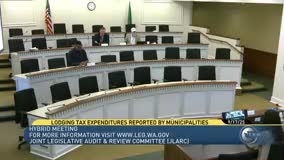
Summary
JLARC staff presented the 2024 lodging tax expenditures data and committee members questioned the usefulness of the self-reported dataset; the executive committee is leaning toward recommending removal of the statutory reporting requirement.
The Joint Legislative Audit and Review Committee on Sept. 17 heard JLARC staff present the 2024 lodging tax expenditures data and raised questions about the value and accuracy of the annual self-reported dataset. JLARC staff reported 213 municipalities received lodging-tax distributions in 2024, with 91% compliance in reporting and roughly $114 million in funds awarded to about 1,700 activities.
The report matters because lodging tax collections—municipal levies on hotel and similar stays—are intended to fund tourism-related activities locally, but committee members pressed staff about whether the current JLARC report provides usable oversight or verification. "We basically just kind of take their word for it," said Senator Gaynor during questions to JLARC staff, asking whether JLARC verifies reported attendance and paid lodging nights. Geneva Johnston, JLARC staff, replied: "We do provide a about a 1 month long technical review period ... but beyond that, we don't do any verification of the data."
JLARC staff told the committee the lodging-tax dataset is self-reported by municipalities, and that JLARC does not use the report as a compliance tool. Committee members and staff explained that compliance auditing to confirm lodging-tax funds were spent as directed by statute is a different activity and is typically done by the state auditor in formal compliance audits. Senator Wagner asked whether JLARC can determine who uses the interactive public data; staff replied that the system does not track users of the online interactive tool.
Committee discussion focused on whether the annual data collection justifies the staff time required. JLARC staff said maintaining the report requires a substantial recurring staff allocation; the executive committee is "leaning towards" recommending removal of the statutory reporting requirement because the product does not function as a compliance mechanism and has limited demonstrated utility. Chair Pollet said the executive committee will bring a recommendation to the full committee for consideration.
The JLARC lodging-tax interactive dataset and the full 2024 report remain available online, and staff said municipalities may continue to use the one-month technical review window to correct submissions. JLARC staff also encouraged members who want more information about specific municipalities or activities to contact the JLARC team for follow-up data requests.
For now, the legislature’s reporting requirements remain in place; the executive committee will take the issue back for a formal recommendation to the full committee and the committee will decide whether to pursue statutory change.
Less-central details: JLARC staff noted municipalities may levy a lodging tax of up to 4%; the Department of Revenue collects and distributes lodging-tax revenues to municipalities. The 2013 legislature originally required municipalities to report lodging-tax expenditures to JLARC; JLARC staff said that earlier 2007 legislative clarifications also expanded allowable lodging-tax expenditures to include tourism-related activities.