
Council advances ordinance language to cap retail cannabis outlets; administration clarifies cap covers Class 5 retail licenses
Get AI-powered insights, summaries, and transcripts
Subscribe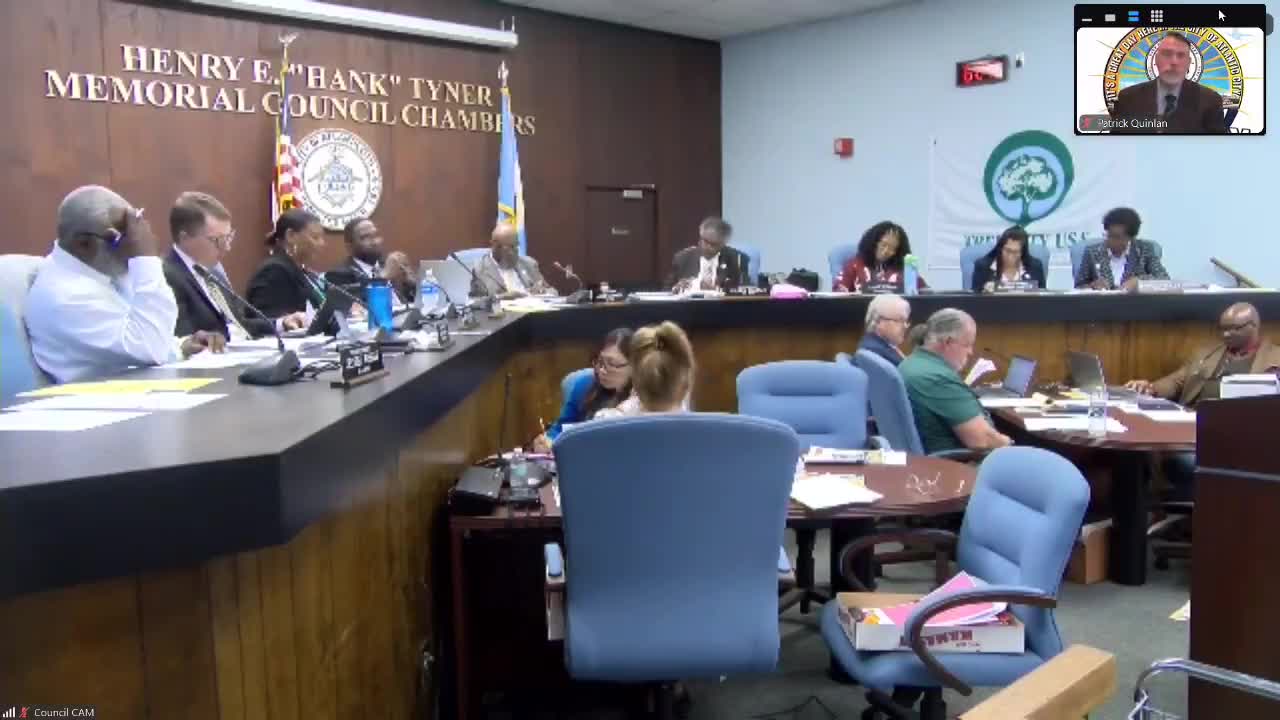
Summary
Council introduced an ordinance to cap retail cannabis outlets in Atlantic City; administration clarified the cap applies to retail (Class 5) licenses and recommended a 16‑license limit split as 12 full annual and 4 micro retail licenses; council asked for the supporting report before second reading and discussed delivery rules.
The Atlantic City Council put forward an ordinance limiting the number of retail cannabis outlets and sought clarification from city staff about how the cap would work.
At first reading the council considered Ordinance 9c, framed as a cap on cannabis retail licenses. Council members requested circulation of the report referenced in the ordinance before second reading and asked administration staff to clarify which license classes the cap would affect.
Administration clarification: a city official identified in the meeting as a city administration representative (Timbers) told council the cap applies to retail (Class 5) licenses only. He said the recommendation the city had received was for a cap of 16 retail establishments, divided into 12 full annual retail licenses and four micro retail licenses (12 annual + 4 micro = 16).
Delivery and jurisdiction questions: councilmembers raised whether uncapped delivery services could effectively circumvent a retail cap. Timbers explained that delivery services are regulated separately: a retail licensee can offer deliveries tied to a retail operation, and there is also a stand‑alone delivery classification (Class 6). He said city controls over deliveries are limited because delivery businesses can be based outside the city and still deliver into Atlantic City under state rules.
Why it matters: a cap on retail outlets determines how many storefront cannabis businesses can operate in the city and shapes market structure and neighborhood impacts. The council’s action was a first reading; members asked to receive the referenced report in full before the second reading to evaluate the recommended numbers and the rationale for the cap.
Decisions and next steps: The ordinance was introduced on first reading and will return for second reading; councilmembers asked staff to circulate the referenced report and to confirm which license classes are affected. The transcript does not record a final adoption vote for second reading during this meeting.
Clarifying detail: the administration’s stated recommendation was 12 full annual retail licenses plus four micro retail licenses (16 total) for the retail class; other cannabis license classes were not capped in the ordinance language as discussed at first reading.
Ending: Council members signaled they will review the administration report ahead of second reading and continue debate on delivery‑service implications and neighborhood impacts.