
Community advocates press city to use Abandoned Properties Act and enforcement tools to address vacant and blighted parcels in Chelsea
Get AI-powered insights, summaries, and transcripts
Subscribe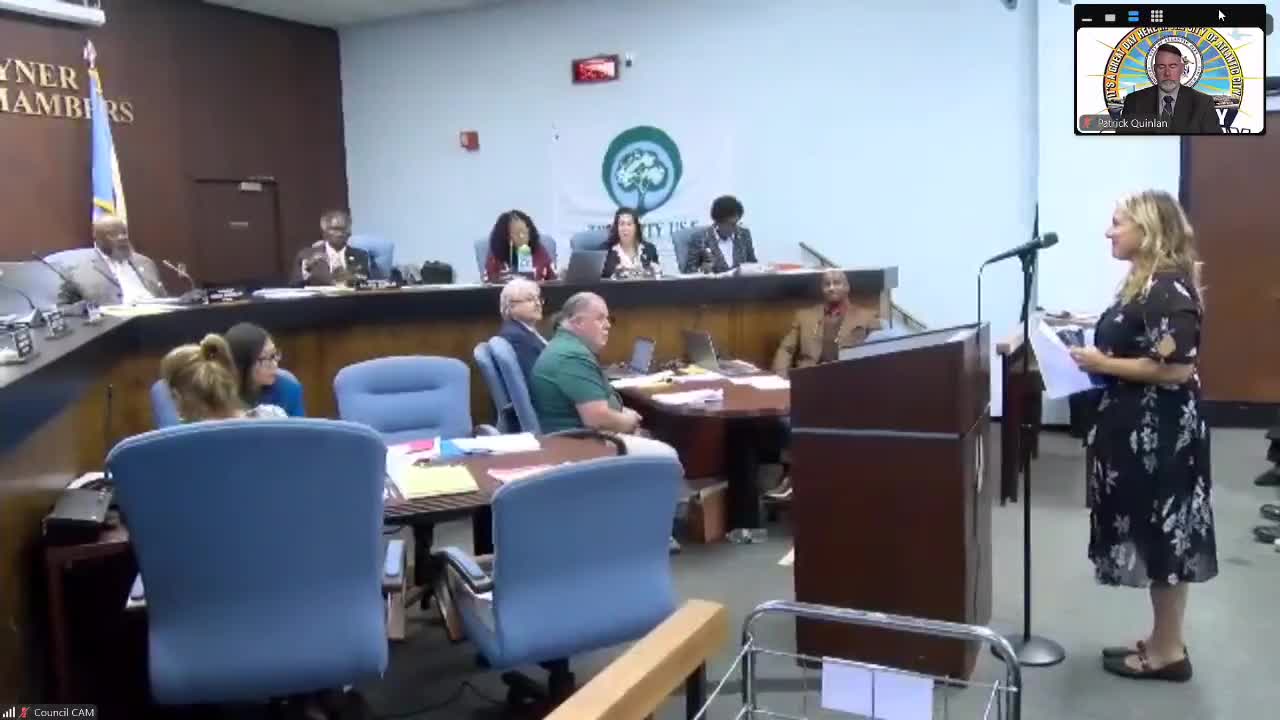
Summary
A Chelsea-area community representative urged Atlantic City officials to more aggressively use the Abandoned Properties Act, a $500 vacant property fee and tax foreclosure to address more than 100 vacant properties in the Chelsea district and reduce neighborhood blight.
At the Sept. 17 Atlantic City Council meeting, a community organizer returned to urge stronger enforcement of the city’s abandoned properties tools, saying local neighborhoods continue to bear costs tied to vacant and blighted parcels.
Elizabeth Taranick, speaking on behalf of neighborhood organizers involved with the Chelsea planning area, told council that “taxpayers are paying the cost to maintain these properties” and said abandoned and vacant buildings attract crime, lower surrounding property values and require city services. She urged enforcement of the Abandoned Properties Act and other local remedies.
Why it matters: Taranick said the problem is concentrated in Chelsea — she reported about 103 vacant properties in her area — and that owners often live outside the city and control multiple parcels. She argued that using existing legal tools would reduce service calls, lower clean‑up costs charged to taxpayers and make more properties available for redevelopment.
What was discussed: - Tools cited: Taranick described three enforcement mechanisms she urged the city to use: the Abandoned Properties Act (which can allow the city to take control of particularly distressed properties), a local vacant‑property fee (she said $500), and foreclosure for properties that fail to pay taxes. She noted one property on Pacific Avenue has been tax‑delinquent since 2017. - Local scale: She said one LLC owns 31 vacant properties in the Chelsea district and another owner has seven properties; she estimated “just over a 100” vacant parcels in Chelsea and said there are thousands in the city overall. - Coordination: Taranick said community development corporations and neighborhood groups are sharing data and working with the city; she offered the organizations as a resource to help contact owners and explain enforcement options.
Questions from council: Council members asked whether the group shares lists and how the city obtains property valuations; Taranick said the city tax assessor provides assessed values used in the backup material. She also described the community’s outreach to property owners to explain enforcement options.
Decisions and direction: No ordinance was adopted during public comment. Taranick’s remarks were part of the public-comment period and served as a request for the administration and council to continue and, where possible, step up enforcement. The transcript shows council members and staff agreed to keep working with community groups and described the city’s existing code and foreclosure procedures.
Clarifying details from the remarks: Taranick said vacant‑property fee enforcement has been litigated in the past and is not fully enforced; she stressed the Abandoned Properties Act includes a mechanism to lien other properties owned by the same owner where the cost to remediate exceeds the property value.
Local context: The presentation references the Chelsea 10‑year plan and requests a government‑official visioning session scheduled for an upcoming Wednesday. Community groups said they will continue to meet with property owners and the city to pursue redevelopment and code enforcement.
Ending: Advocates asked the council and administration to lean on existing legal authorities to reduce neighborhood blight and make more properties available for reuse; no new council action was taken during the public‑comment item.