
Riverview School District projects enrollment decline, recommends no impact fees for 2026
Get AI-powered insights, summaries, and transcripts
Subscribe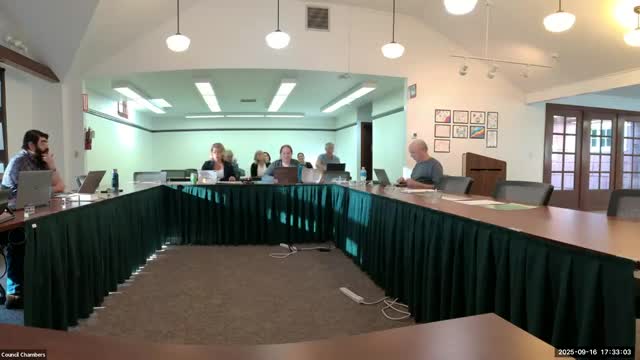
Summary
The Riverview School District told the Duval City Council it will not collect school impact fees for calendar year 2026 after a demographer projected continued enrollment decline across most grades.
The Riverview School District told the Duval City Council it will not collect school impact fees for calendar year 2026 after a demographer projected continued enrollment decline across most grades. Misha Robertson, superintendent of business and operations for the Riverview School District, presented the district's 2025 Capital Facilities Plan and the data behind the recommendation.
The plan, developed under the Washington State Growth Management Act and adopted by the district's school board on June 24, 2025, ties impact‑fee eligibility to three requirements: projected growth over the six‑year planning period, an identified capacity need to serve that growth, and a specific project to address it. Robertson said the demographer's 2025 forecast shows a net decline, meaning the district cannot meet that eligibility test this year. "This year's plan does not have the district collecting any impact fees," Robertson said.
Why it matters: impact fees can contribute toward the cost of adding permanent classroom capacity in growing districts; when they are not collected, bonding or other district revenue sources will pay a larger share of future capacity projects. Robertson and the district's bond planning committee said their highest capital priority is rebuilding the district's middle school, which the advisory committee concluded has reached the end of its useful life.
Key facts presented - District enrollment: "just under about 3,000 students," Robertson said. - Elementary permanent capacity: about 1,130 seats; current elementary head count reported as about 1,296, which the district mitigates with portable classrooms. - Middle school permanent capacity: about 657; last year's enrollment about 633. Robertson said Tolt Middle School (the district's middle school referenced in the presentation) currently has sufficient permanent capacity but that the campus has reached end‑of‑life conditions that favor rebuilding rather than incremental renovation. - High school capacity: about 808; last year's enrollment about 809. - The district projects limited growth across the next several years, with some flattening and modest recovery at the high‑school level toward the end of the planning window.
Robertson said Flow Analytics produced the demography work and that the district commissions that analysis roughly every two years. She summarized factors the demographer used: relatively high home prices in new housing, multigenerational households that do not sell to families with school‑age children, and lower birth rates. "So we're not seeing young families moving into those as often," Robertson said.
Discussion and next steps Council members asked how the impact‑fee determination affects the city and voters. Robertson said the absence of fees "won't impact the city of Duval" because collection would pass through to the district, but it will shift more of a future capacity project's cost onto a bond measure and, ultimately, taxpayers if the district proceeds with one. Robertson added the district will update its plan in 2026 and "relook at enrollment growth and needs" and reassess impact‑fee appropriateness then.
The district and a bond planning committee have identified a middle‑school capacity project as the likely next asset if the board approves a bond measure. Robertson said the district anticipates discussing a possible ballot measure with the board in the coming months and that any bond would be the primary vehicle to pay for a rebuild and other major maintenance needs. She emphasized that impact fees are restricted by statute to funding new capacity and cannot be used to address aging facilities or existing deficiencies.
No formal council action was taken during the presentation; the item was informational.
Ending: The district will update the Capital Facilities Plan next year. Council members and the district said they expect to revisit impact fees and enrollment projections after the 2026 update.