
CalPERS actuarial study recommends raising inflation assumption to 2.5%; keeps 6.8% discount rate
Get AI-powered insights, summaries, and transcripts
Subscribe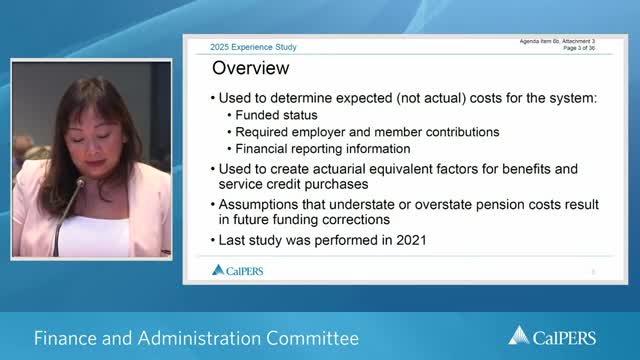
Summary
An experience study presented to trustees recommended increasing the long‑term inflation assumption from 2.3% to 2.5% while leaving the 6.8% discount rate unchanged; staff said the inflation change is the single largest cost driver and could trigger PEPRA member rate changes for some plans.
CalPERS’ actuarial team told trustees on Sept. 16 that its 2025 experience study recommends raising the long‑term inflation assumption from 2.3% to 2.5% and making targeted updates to salary scales, mortality improvement factors and other demographic assumptions. The office recommended no change to the system’s 6.8% discount rate after coordinated review with the investment office and reference portfolio analysis.
Actuaries said inflation was the study’s largest cost driver and that higher long‑term inflation expectations have implications for future salary scales, which are directly tied to payroll growth assumptions. David Clement, CalPERS actuarial staff, showed historical inflation measures and market‑based indicators and noted consistent upward pressure on inflation expectations since 2022. The team recommended modest salary‑scale adjustments for some plan groups and minor updates to mortality tables while excluding anomalous pandemic years from trend setting.
Staff quantified plan‑level impacts and said the total employer normal cost changes vary by benefit formula. The study estimates the recommended assumption changes could trigger PEPRA employee contribution rate adjustments in a subset of public agency and safety plans; staff said it expects most plans will have small changes and that only a limited number of PEPRA plans and actives would see rate changes. The actuarial office will present a second reading in November and seek adoption then; model updates and member communications are already in preparation to avoid service disruptions if trustees adopt the recommendations.