CalPERS amends risk‑pool rules so large contracting agencies can exit pooled rates
Summary
Regulatory changes approved by the Finance and Administration Committee will allow pooled contracting agencies with 200 or more active members to leave CalPERS risk pools after the 2026 valuation, affecting about 14 miscellaneous plans, staff said.
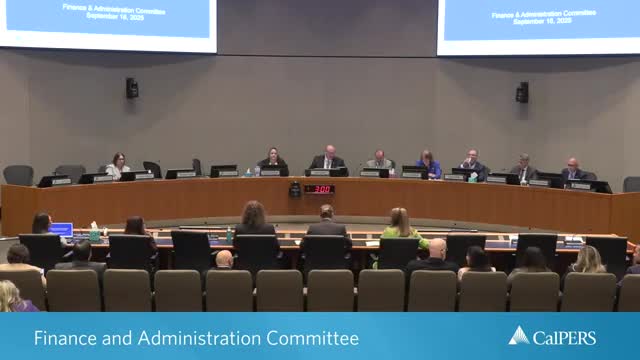
The Finance and Administration Committee approved proposed regulatory changes on Sept. 16 to clarify CalPERS operational procedures for maintaining risk pools and to provide clear criteria for when a contracting employer’s rate plan may enter or cease participation in a risk pool.
Historically, CalPERS moved small non‑pooled plans into pooled rates when active membership fell below 100 and did not provide a path out of pooled status. Staff and actuaries recommended clearer zones: mandatory pooling for plans under 100, optional entry for plans with 101–149 active members, elective departure for pool plans with 150–199 active members, and administrative removal from the pool for plans with 200 or more active members on the June 30 valuation date. Scott and actuarial staff told trustees the change responds to long‑term growth in a small set of agencies and aims to reduce administrative friction while preserving pooling for very small employers.
Staff estimated about 14 miscellaneous plans would meet the 200‑member threshold based on current membership and that the rule could be implemented starting with the 06/30/2026 valuation, which would set rates for fiscal 2028–29. CalPERS staff said actuarial analysis and employer outreach were conducted and that non‑pooled plans of similar size have functioned without disruption.
Trustees voted to submit the final rule‑making package following the 45‑day public comment period; staff will return with any substantive comments received and finalized language for the Office of Administrative Law filing.