
CVS Caremark outlines onboarding plan for CalPERS PBM switch; trustees and retirees raise formulary concerns
Get AI-powered insights, summaries, and transcripts
Subscribe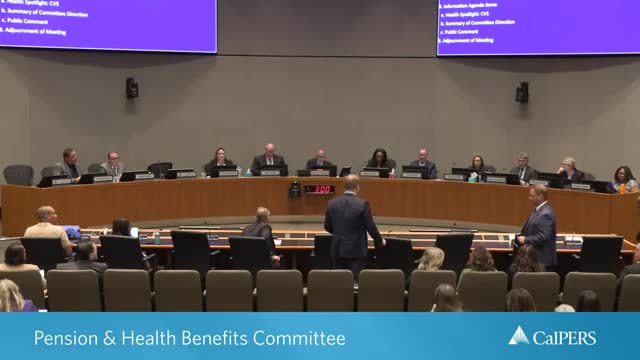
Summary
CVS Caremark presented its implementation and member‑support plan for CalPERS’ 2026 pharmacy benefit manager transition; CalPERS staff and CVS said clinical alternatives exist for drugs removed from the prior PBM formulary, while a retiree group raised concerns after CalPERS posted a list of approximately 330 drugs that will not carry over.
CVS Caremark executives presented a detailed implementation plan to the Pension and Health Benefits Committee on Sept. 16 as CalPERS shifts its pharmacy benefit management (PBM) contract to CVS for 2026. CVS outlined digital tools, a dedicated call center and white‑glove outreach for specialty patients, while CalPERS staff addressed public concerns about drugs that will not transfer from the incumbent PBM’s formulary.
Ed Devaney, president of CVS Caremark, said the company has assigned a dedicated implementation team and a 120‑person service operation to support members 24/7, and has created an onboarding microsite and app resources to let members check drug costs and find community pharmacies. Devaney told trustees CVS will import prior authorizations, mail‑order refills and historical drug files where possible to reduce patient disruption. CVS reported just over 100 calls and more than 1,000 microsite visits on the first day of open enrollment activity and described a “white glove” program to reach roughly 3,000 specialty users.
During public comment, Larry Woodson of California State Retirees said a CalPERS‑posted list showed about 330 drugs that Optum covered but CVS Caremark will not, including some topical agents and “some diabetes drugs.” CalPERS staff member Dr. Logan responded that CalPERS had worked to ensure a clinically suitable alternative exists for each medication on the Optum list and that many excluded drugs have generic equivalents; staff also noted standard appeal processes remain available when a clinician documents medical necessity.
Trustees asked about continuity for maintenance medications and the mechanics of data transfer from the incumbent PBM. CVS and CalPERS said they are working with the outgoing PBM to bring over open refills, prior authorizations and necessary drug‑level files to reduce cases of interruption. Both CVS and CalPERS emphasized ongoing monitoring and member communications, with webinars and FAQs planned for the open enrollment period.
CalPERS staff and CVS said they view the transition as operationally complex but manageable and urged members with questions to use posted resources and appeals processes if a prescriber believes a non‑covered drug is medically necessary.