
Linden officials roll out traffic-analysis tool and approve $341,000 police equipment bond
Get AI-powered insights, summaries, and transcripts
Subscribe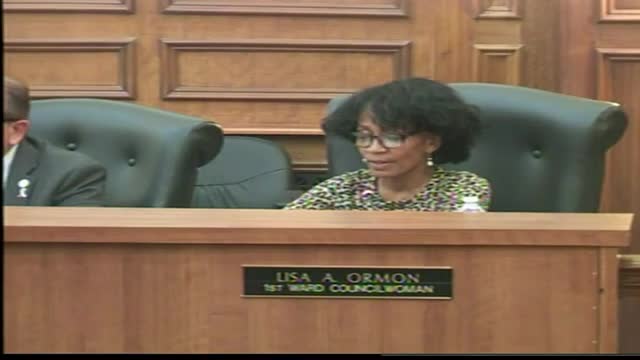
Summary
The Accident Review Committee previewed a new traffic-analysis tool that uses third-party app data to locate congestion and speeding; the council also adopted a $341,000 bond ordinance to fund police equipment.
LINDEN, N.J. — Linden officials described a new traffic-analysis tool and the City Council adopted a bond ordinance to fund police equipment during the Sept. 16 meeting.
Councilwoman Leticia Orman, chair of the Accident Review Committee, said the tool pulls anonymized third-party app data — similar to Waze or Google Maps data sources — to map congestion and average speeds on specific blocks. She demonstrated the system in committee and told the council that in one sample pull "85% of the people are going 19 miles per hour," a figure she used to illustrate that perception of speeding may not always match the data. Orman said officers are being trained to use the tool and that the committee can pull data on request to prioritize enforcement and traffic-calming efforts, with a target of full operational use "within the next . . . 30 days."
Why it matters: The tool is meant to help the city allocate traffic enforcement resources and to provide objective data for decisions such as adding four-way stops. Council members said the system will be used with traditional traffic studies and accident-roll analyses.
Police equipment funding: The council adopted bond ordinance 69-42, a $341,000 appropriation for police department capital equipment, authorizing $323,950 in bonds or notes to finance part of the appropriation. The public hearing for the ordinance drew no speakers and the council closed the hearing and adopted the ordinance by roll call.
Public comment and enforcement concerns: In public comment, resident Ed Kaminski praised recent enforcement technology purchases and said new license-plate readers and other measures were "definitely a good thing." Kaminski also urged the council to open broader financial records related to senior housing and other city spending, and flagged bus-driver safety concerns, urging more monitoring of drivers who stop unsafely while dropping off children.
Action taken: Ordinance 69-42 (police equipment appropriation $341,000) was adopted by roll-call vote; recorded yes votes included Orman, Javec, Caldwell, Mohammed, Reavis, Delgado, Strano, Armstead, Hudak and Yamakaitis. Council members said police will combine the new analytic tool with field enforcement; the Accident Review Committee will accept data requests from council members and residents to target enforcement.
What remains: The traffic-analysis tool still requires internal training for officers, establishment of request procedures for council members, and operational protocols for data use in traffic-calming decisions. The council did not tie specific enforcement actions to individual data pulls during the meeting.
Closing note: Officials said the technology is one more step toward data-driven traffic enforcement; council members asked residents to report problem locations so the committee and police can run targeted analyses.