Get Full Government Meeting Transcripts, Videos, & Alerts Forever!
Get email alerts on the Jail Healthcare topic
No spam. Unsubscribe anytime.
Wichita County hears CoreHealth proposal to continue jail medical services in 2026
Summary
CoreHealth presented a proposal to renew its contract to provide inmate medical and mental health services for 2026, outlined vacancy rebates, said it keeps off‑site transports low with telemedicine and e-consults, and described plans to address electronic medical record (EMR) integration and rising average daily population.
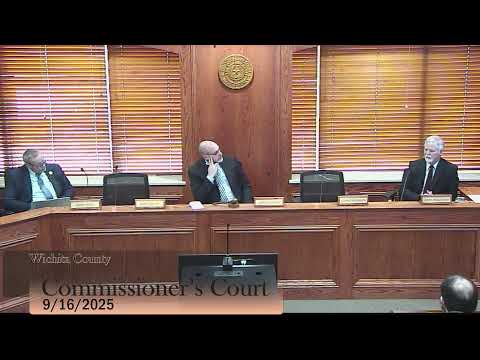
CoreHealth executives told the Wichita County Commissioners Court on Sept. 16 that the company seeks renewal to continue providing jail medical services in 2026 and outlined cost, staffing and operational details for the court to consider.
CoreHealth founder and CEO Todd Murphy said the company’s contract is currently based on a population level the company described as about 550 inmates and that the jail population has risen in recent days; Murphy said the morning census was 646, while another speaker said 593 were physically at the Law Enforcement Center. "It costs more to do more," Murphy said, describing higher labor and clinical demands as the population grows.
CoreHealth emphasized three operational points for commissioners: (1) a vacancy rebate the company will issue for unfilled positions, (2) lower off‑site transport rates through telemedicine and e‑consult programs, and (3) claims and utilization management that CoreHealth says has reduced billed hospital costs for other county clients.
Why it matters: Commissioners said they will weigh CoreHealth’s services, transparency and costs against alternatives, including a proposal from Texas Tech University scheduled for a future meeting. The county must balance continuity of care, liability exposure and potential cost savings as its average daily population changes.
CoreHealth described the vacancy rebate as a credit or refund tied to positions the vendor did not fill; Murphy said the company expects to rebate roughly $150,000–$200,000 for the current year and said, at the pace described, vacancy rebates could total up to about $1 million across a five‑year span. The company said its current contract is "about $4.9 million" for the 2025 year; the presentation included that figure but the transcript included inconsistent wording about exact decimals and should not be read as a precise line‑item figure.
On off‑site transports, CoreHealth's chief medical officer said the provider averaged about 10 off‑site specialty visits for Wichita in 2024 and that Texas Tech’s Lubbock program reported 51–70 off‑site transports per month at its larger ADP; CoreHealth said an ADP‑adjusted comparison would put the Texas Tech number near 27.5 and argued its e‑consult/telemedicine program helped avoid roughly 72% of off‑site visits for cases where e‑consult was used. "We’ve saved 72% of off‑site visits" by using e‑consults, the speaker said.
CoreHealth also described an off‑site claims and utilization management service that negotiates hospital bills; the company presented example outcomes from several other counties showing reduced final payments compared with initial invoices. The company said those savings relate to negotiation and claims management, not changes to clinical care.
Staffing and clinical coverage: CoreHealth said it proposes one staffing change for 2026 — an additional 10 hours per week for a psychiatric nurse practitioner — and that all other elements of the current staffing addendum and vacancy caps would remain as negotiated previously. The company said it maintains on‑site registered nurses and licensed vocational nurses, EMTs, daily providers and on‑call coverage 24/7.
EMR and records: CoreHealth told the court it is working with county and vendor staff to address the facility’s two EMR databases (a historic database and a current operational database). CoreHealth said those two databases cannot be merged in their current platform but that its proposed integration vendor (Sapphire) can accept two feeds and present a single integrated view; the company and county staff said the historical database is backed up nightly as a point of recovery.
Other issues raised: Captain Patterson and county staff were quoted discussing a pharmacy cap; county staff said pharmacy expenses currently exceed the pharmacy cap by about $4,500 and projected the overage could be about $150,000 by year end, driven in part by a small number of high‑cost prescriptions. Commissioners asked about how cost adjustments would be handled if the jail’s ADP remained sustained at higher levels; CoreHealth said the vendor and county would meet, review workload and, if necessary, negotiate adjustments.
Process and next steps: No formal action was taken at the Sept. 16 meeting. Commissioners said Texas Tech will present next week and that the court will weigh both proposals before deciding whether to renew or to select a different partner. Several commissioners emphasized the court’s fiduciary duty to taxpayers and the need to factor both service levels and projected costs into any renewal decision.
"We will weigh all of those different things as we look to make a decision," the presiding judge said. Commissioners also asked county staff to track pharmacy and ADP trends and to provide comparative data ahead of a final decision.
Ending note: The county did not vote on a contract at the Sept. 16 meeting; the court will hear a Texas Tech proposal at a subsequent session and deliberate with staff on costs, staffing and operational implications before taking formal action.