Get Full Government Meeting Transcripts, Videos, & Alerts Forever!
Get email alerts on the Chapter 40r Modernization topic
No spam. Unsubscribe anytime.
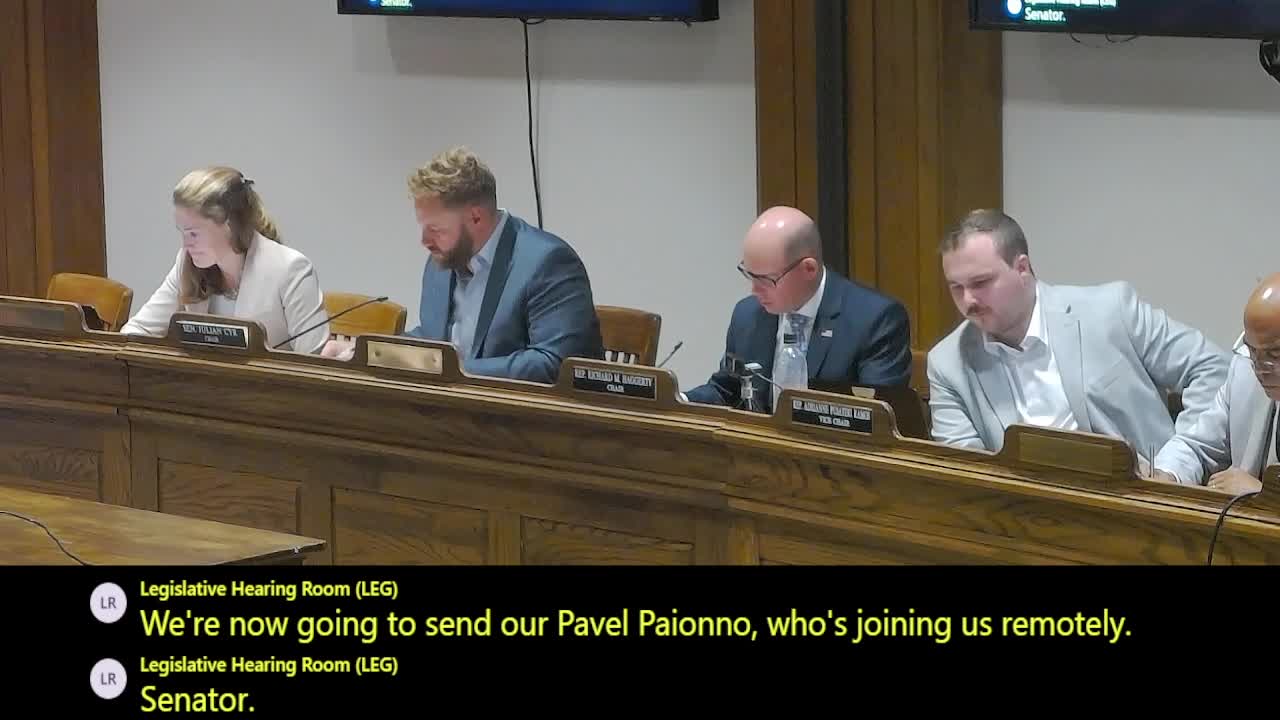
Senator urges updating Chapter 40R payments to reflect inflation, revive smart‑growth incentives
Summary
Senator Payano and municipal advocates told the committee that Chapter 40R’s incentive payments have lagged behind inflation since 2004 and proposed nearly doubling upfront incentives and raising per‑unit bonuses to spur smart‑growth zoning.
Senators and municipal advocates urged the Joint Committee on Housing to update Chapter 40R, the smart‑growth zoning incentive law, arguing that the program’s monetary incentives have not kept pace with two decades of inflation and rising construction costs.
“Those incentives reflect the economy and the value of the dollar back in 02/2004,” said Senator Payano, who testified in support of S 10 21, a bill that would increase the one‑time upfront incentive and raise per‑unit bonus payments.
The amendment before the committee would “nearly double” the one‑time 40R incentive payment and raise the per‑unit bonus from $3,000 to $6,000, sponsors said, and would add CPI adjustments and accountability mechanisms so the program remains effective as costs evolve.
Supporters cited earlier 40R successes: Payano referenced Haverhill’s 2007 use of 40R to create two projects that produced 362 housing units, noting the city then received approximately $600,000 in upfront incentive payments and $1.1 million in density bonus payments under the earlier formula.
Why it matters: Witnesses said the change would make 40R attractive to more municipalities by restoring the program’s financial logic and enabling communities to invest incentives in infrastructure, schools and services related to new housing.
Implementation notes: Testimony emphasized that 40R payments flow to municipalities (not to developers) and that increasing those payments would encourage towns to zone and permit smart‑growth districts near existing centers and transit.
Ending: Supporters urged the committee to advance the modernization bill so that 40R again functions as a timely tool for compact development and downtown revitalization.