Get Full Government Meeting Transcripts, Videos, & Alerts Forever!
Get email alerts on the Social Services Report topic
No spam. Unsubscribe anytime.
Human Services committee reviews July social services report; child-care funding remains constrained
Summary
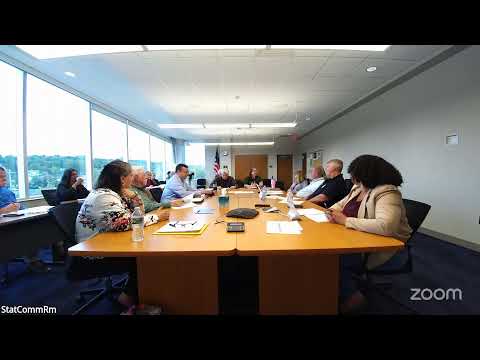
Lacey Trimble, commissioner of social services and mental health, presented the Human Services Committee with the department's July service and fiscal report at an afternoon meeting where legislators pressed staff about SNAP error rates and the availability of child-care subsidies.
Lacey Trimble, commissioner of social services and mental health, presented the Human Services Committee with the department's July service and fiscal report at an afternoon meeting where legislators pressed staff about SNAP error rates and the availability of child-care subsidies. The report summarized program caseloads, recent data corrections, and outstanding state decisions that could change local funding.
The report said temporary assistance was provided to 1,532 cases in July, made up of 590 family-assistance cases and 952 safety-net cases; 28 recipients entered employment in July for a year-to-date total of 225. Trimble told the committee 18,518 cases received SNAP benefits in July — a month-to-month decrease and the lowest figure seen so far this year, though “slightly higher than the same time last year.” She said the county has not yet received a final state error-rate determination tied to changes from HR 1 that could require counties to pay a share of benefits if the statewide error rate is high.
Legislator Dewey asked, “What causes the error rate? What are some examples?” Trimble replied that common causes include missing or improperly used documentation and calculation mistakes by staff; she said a back-end data process also flags discrepancies after benefits begin. Trimble said Orange County has had two error findings so far that the county has disputed and is awaiting a response.
On homelessness and emergency housing, the department reported averages of 17.7 families and 44.4 single adults in emergency shelters in July. The department corrected an earlier reporting error: June counts should read 130 families and 173 individuals, and July counts should read 122 families and 155 individuals. Thirteen people who were served by the county’s housing resource center moved into permanent housing in July; the report gave a year-to-date average of 18.9 individuals per month moving from the center to permanent housing. The Project Life program averaged 12.4 families; 809 individuals experiencing homelessness received services in July, the report said, and the monthly average year to date was 828 — 91 more than the prior year.
Medicaid enrollment data in the report showed 20,395 locally managed Medicaid cases in July and a roughly flat trend compared with recent months; Trimble warned that the data the county receives are often several months old. Child-protective-services staff investigated 236 reports of abuse and neglect in July; 156 were assigned to the traditional response and 80 to an alternative response. Foster-care placement in July was reported at 139 children, the report said, and the year-to-date average was 154.
The department’s special investigations unit reported investigating roughly 157 error/benefit-review cases in July; combined July cost avoidance from those reviews was $711,144 and the year-to-date total was nearly $5.6 million. The unit investigated 106 fraud-or-abuse allegations in July and substantiated 82 of them; Trimble said an internal process change and a focused staff assignment led to a spike in closures as the unit worked through a backlog.
Child-care funding and eligibility drew sustained attention from legislators. Trimble said the county spent more than $16 million on the child-care program in the last year and that the program’s cost is rising. She explained that under current state rules the program now pays up to 80 absences for a child — a change made early in the COVID period to help stabilize providers — and that eligibility thresholds have expanded. “Now a family of four making over a $100,000 is eligible for the subsidy,” Trimble said, adding that the example discussed at the meeting was roughly $108,000 to $113,000 where a family of four might pay about $18.50 per week in family contribution. Trimble told the committee that because state funding has not increased proportionately, the county cannot approve new child-care applicants now and that any reopening of approvals would be on a limited basis and subject to state allocations and possible waiver rules.
Committee members also asked about staff supports for workers exposed to traumatic situations. Trimble said the department currently uses a disaster mental-health team for major incidents and has staff wellness efforts — including a staff development unit that offers wellness activities, a compassion-satisfaction survey and trauma-informed yoga — but that there is no formal peer-support program for day-to-day secondary-trauma supports. She said she would pursue grant funding if it became available to expand services.
No formal votes were taken on policy changes at the meeting. Committee members moved and seconded a motion to discuss the report at the outset and later moved to adjourn. Several items in the report are contingent on state or federal actions — including the final SNAP error-rate determination and state allocations for child-care funding — and Trimble told the committee the department would return with updates as those decisions are finalized.