Lifetime Citizen Portal Access — AI Briefings, Alerts & Unlimited Follows
Orange County updates design, financing and public‑participation plan for Harriman wastewater upgrade
Loading...
Summary
Consultants reported the Harriman wastewater treatment plant is on track for 60% design, is pursuing Clean Water State Revolving Fund and state grant funding, and will submit an enhanced public participation plan required under the state SPDES permitting process.
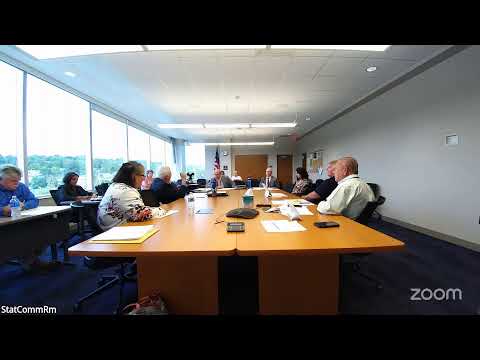
Consultants and county staff told the Orange County Sewer District No. 1 Advisory Committee on Tuesday that the Harriman wastewater treatment plant upgrade is on schedule for a 60% design milestone, is advancing multiple financing applications and will begin an enhanced public‑participation program required by the state permit process.
The design team said the project has an average daily flow capacity planned at 9,000,000 gallons per day and a much higher peak hydraulic flow the system must be sized to accept. County staff said the project currently qualifies for significant federal Clean Water State Revolving Fund (CWSRF) assistance and that a state‑required enhanced public participation plan (EPP) will be submitted to the New York State Department of Environmental Conservation for review.
Why it matters: the county is seeking to replace its current 6 MGD facility with a new plant to serve the same service area; financing, design choices and the state permit process will shape the timetable, costs and public outreach for construction and operation.
Mary Beth Bianconi, partner at Delaware Engineering DPC, told the committee the technical working group met after the last advisory meeting and that the team expects to submit 60% design documents in a matter of weeks. She described progress on layout and systems design, including potable and non‑potable water systems for the site, yard hydrants and foam control nozzles, grease and grit removal design, and screening options. The design includes mechanical screens with a manual bypass and a provision for adding a fourth screening channel in the future.
Bianconi said consultants have scheduled field visits to review operational examples at other plants and that geotechnical field work is set for Sept. 22.
On regulatory issues, staff said the project team has shifted focus to supporting an application for the upgraded 9 MGD plant and is meeting with DEC staff to pursue eliminating a second outfall (Outfall O‑2) that the team said is no longer necessary.
On financing, the county reported the project qualifies in the draft federal fiscal‑year 2026 intended use plan for CWSRF funds that would include $25 million at zero percent interest on a 30‑year term; additional project costs would be eligible for subsidized loans at below‑market rates. County staff said that status is subject to final state and federal allocations expected with the October intended use plan update. “That is pretty darn good money,” Bianconi said.
The county also submitted a Water Infrastructure Improvement Act grant application on July 31 seeking cost share support. Staff described that grant as providing “25% of net costs up to $25,000,000 and $5,000,000 annual increments” in the order described in the application materials; the county said the legislature provided materials to support that application on Sept. 4 and the application was filed with grant staff assistance.
Because part of the treatment plant service area overlaps communities the state classifies as disadvantaged communities and potential environmental‑justice areas, the project must include an enhanced public participation plan as part of the State Pollutant Discharge Elimination System (SPDES) permit application. Bianconi described key EPP elements the county will submit to DEC for approval: an outreach contact list that includes municipal and community leaders; a project liaison (to be assigned by the project sponsor); four topical public meetings tentatively planned from late 2025 through mid‑2026 on truck traffic, aesthetics, operations and finances; fact sheets in multiple languages; and a dedicated project website plus physical document copies at municipal offices and libraries.
Bianconi added a brief public‑education note during her presentation: “Flushable wipes are not flushable,” and urged residents to dispose of non‑toilet paper items in the trash to reduce operating problems and costs at the treatment plant.
County staff said they will coordinate timing of the EPP with DEC review and that outreach schedules and meeting locations will depend on the state’s approval of the plan. Committee members in attendance included municipal officials from Harriman and Monroe who had been invited to the meeting; the presenters said they had given community presentations to local governing bodies earlier in the year and will continue doing so as new financing and design information becomes available.
No formal votes were taken on design choices or financing at this advisory meeting; staff characterized the updates as progress reports and next‑steps for regulatory filings, outreach and continuing design work.
Looking ahead, the county said it will track final state intended use plan outcomes in October, proceed with the 60% design submittal, and file the EPP to DEC for review. Additional grant opportunities will be considered as they are announced.