Get Full Government Meeting Transcripts, Videos, & Alerts Forever!
Get email alerts on the Micro Mobility topic
No spam. Unsubscribe anytime.
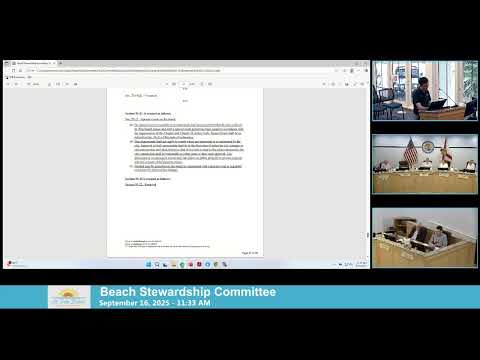
Special committee leans toward broad ban on motorized micro‑mobility on St. Pete Beach
Summary
At a committee meeting to revise the city’s beach ordinance, members discussed banning electric bikes, scooters and self‑balancing devices from all beaches, clarifying exceptions, and the enforcement challenges of permitting or licensing such devices.
St. Pete Beach — Members of a special committee reviewing proposed beach‑ordinance updates discussed restricting motorized micro‑mobility devices on the city’s beaches, with members repeatedly raising safety, wildlife and enforcement concerns.
The committee examined draft language that would bar electric bicycles, rental scooters and single‑wheel “hoverboard” devices from the sand unless explicitly permitted. Staff said the revision would align the ordinance with an expanded definition that the committee agreed should cover privately owned devices as well as rental units.
Why it matters: Committee members cited near‑misses between pedestrians and fast devices, damage to shorebird and sea‑turtle habitat, and the difficulty of on‑the‑spot enforcement as reasons to limit use. Staff and several members said mobility devices used as assistive devices — for example, motorized wheelchairs — should remain exempt.
What was proposed and discussed: City staff noted the state statutory definition for some micro‑mobility devices covers rental devices only; the draft keeps a broader local definition so privately owned e‑bikes and one‑wheel devices would be covered. Committee members debated whether to allow permits or registration for responsibly operated bikes, and several said permitting would create enforcement and administrative burdens that undercut the intent of a ban.
Enforcement and exceptions: Committee members urged clarity on exemptions for medically necessary devices and for law‑enforcement and emergency uses. Staff suggested referencing the statutory definitions in the ordinance and adding text to help code enforcement and deputies identify prohibited devices while in the field.
Next steps: Staff said it would expand the ordinance’s micro‑mobility definition to explicitly include single‑wheel devices and hoverboards, preserve assistive‑device exemptions and bring the updated language back to the committee for November review.