Get Full Government Meeting Transcripts, Videos, & Alerts Forever!
Get email alerts on the Solid Waste Recycling topic
No spam. Unsubscribe anytime.
Vermillion County staff report higher-than-expected cleanup turnout, ask council to clarify solid-waste funds
Summary
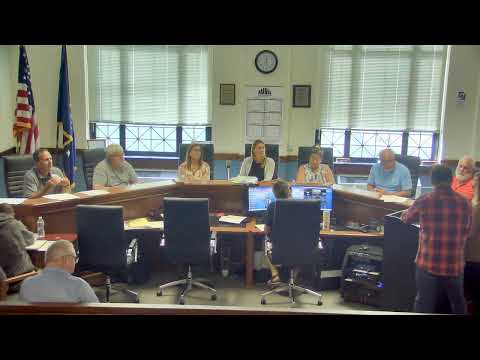
County solid-waste staff told Vermillion County budget reviewers they handled nearly 1,000 loads at two garages this year, collected more tires than in 2024 and are asking the council to clarify two separate solid-waste funding streams before the county’s formal budget adoption.
Vermillion County solid‑waste staff told county budget reviewers on day two of the hearings that the program handled “almost 953 loads” this year across two garages and collected about 1,600 tires at a one‑day tire recycling event.
The program’s manager said the county records two separate solid‑waste funding streams: an 82.10 fund that requires approval through the Department of Local Government Finance (DLGF) and an annual $30,000 appropriation from the county general fund that commissioners have been awarding to support cleanup days, tire recycling and other services.
Those two distinct funding streams matter because the 82.10 fund has a current reported balance of about $54,000 and requires a special DLGF‑approved meeting to finalize next year’s budget, the manager said. “We have to have a public hearing,” the manager added, and county staff scheduled a special meeting for Sept. 30 at 2:00 p.m. to approve the 82.10 fund budget.
Why it matters: solid‑waste staff said cleanup days and a planned toxaway (hazardous waste) day can cost tens of thousands of dollars; a toxaway event typically costs between $25,000 and $40,000, the manager said. Solid‑waste staff said the current fund balance could be used in 2026 to cover a toxaway day rather than returning for an additional appropriation.
Staff also described how tipping fees and other receipts are collected into a county bank account and are being recorded in the county’s Gateway accounting system as solid‑waste receipts. The manager said the county recently completed an audit of solid waste accounts and “we got it squared away.”
The manager and staff described volunteer and highway‑department support for events: volunteers (including FFA students) contributed dozens of hours at the tire event, while county highway crews provided additional labor that was compensated with overtime or comp time and therefore was not counted as volunteer time.
County staff discussed interest in a countywide recycling option. A private vendor used by neighboring Park County and others would provide two mixed‑recycling dumpsters year‑round (north and south locations) and handle collection and hand sorting. Staff estimated a contract cost around $100,000 annually for the two fixed locations; the vendor would own and service dumpsters and the county’s role would be contract management only.
Staff said residents already take recyclables to other counties or companies and that a county program would centralize that service. “People in Vermillion County are recycling. They just don't use [county facilities],” the manager said.
Nut graf: County staff said continuing the established $30,000 general‑fund support and clarifying access to the 82.10 fund will be necessary to sustain cleanup days, tire recycling and a possible toxaway day; commissioners and staff scheduled a Sept. 30 meeting to resolve the 82.10 fund budget before the formal budget adoption in October.
Additional details: staff said tire recycling grew compared with 2024 (about 1,400 tires in 2024 versus roughly 1,600 in 2025), and that cleanup days served hundreds of loads and were well‑used by residents. The manager said some jurisdictions that operate recycling programs require residency verification; vendors vary in whether they enforce residency.
Ending: The council did not take a formal vote during the informational hearing; staff left the council with two discrete tasks: (1) confirm how the 82.10 fund will be handled with DLGF at the Sept. 30 meeting and (2) advise whether the annual $30,000 general‑fund appropriation will continue to support cleanup efforts and a possible toxaway day in 2026.