Get Full Government Meeting Transcripts, Videos, & Alerts Forever!
Get email alerts on the Water Resources topic
No spam. Unsubscribe anytime.
Resident warns San Pedro River drying after court-ordered monitoring wells read "dry"
Summary
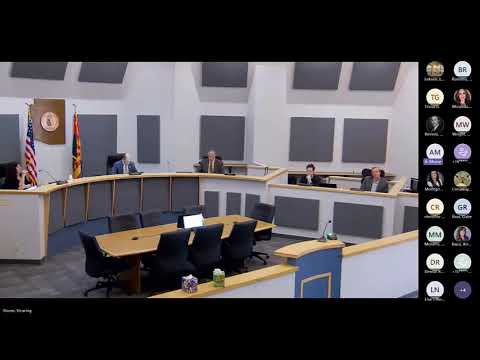
At the Flood Control District meeting on Sept. 16 in Bisbee, resident Lisonbee Morris said a court-ordered monitoring well showed a June 30 "dry" reading and that multiple wells and USGS data show declining groundwater levels; she urged lawful steps to protect the San Pedro River.
Resident Lisonbee Morris told the Flood Control District during public comment on Sept. 16 in Bisbee that groundwater monitoring wells protecting federal water rights for the San Pedro River have shown critically low readings and that the river is at risk of drying.
Morris said, “Federal water rights were established to protect the San Pedro and its globally important habitat for aquatic and riparian species,” and that one court-ordered monitoring well showed a June 30 reading of “dry,” meaning the water table dropped below the depth of that well. She said two other monitoring wells within a mile of Fort Huachuca are also showing declining water levels and that new U.S. Geological Survey data show the water table under the fort continues to drop.
The speaker cited publications reporting the findings and said Fort Huachuca is “the single largest user of water from the San Pedro River” with an estimated 400,000 acre-feet of withdrawals since 1940, which she described as “the equivalent of over 130,000,000,000 gallons.” Morris added that “7 of the 13 required water levels and stream flows have been violated with 2 additional wells trending downward,” and she called for lawful measures to preserve the river.
Morris framed the San Pedro as “the last free flowing river, in Arizona, Desert River” and referenced the San Pedro National Riparian Conservation Area, which she said was created by Congress 37 years ago. Her remarks occurred during the meeting’s public comment period; the board took no formal action on the issues she raised during the session.
Morris concluded, “The time to act is now before it is too late and the river dries up completely,” and she asked supervisors to ensure “that all lawful measures are taken to preserve and protect this national ecological treasure and outstanding local natural resource.”
No staff report or board directive on groundwater, Fort Huachuca withdrawals, or monitoring-well follow-up was recorded in the meeting minutes for this item.