Get Full Government Meeting Transcripts, Videos, & Alerts Forever!
Get email alerts on the Attorney Fees Lien topic
No spam. Unsubscribe anytime.
Appeals court hears dispute over attorney's lien, enforcement route and jurisdiction after divorce judgment
Summary
An attorney sought enforcement of an award through a contempt proceeding and the appeals court heard whether the probate judge had jurisdiction to determine and then allow enforcement of an attorney's lien, and whether the lien could be enforced in a contempt action instead of a superior-court enforcement action
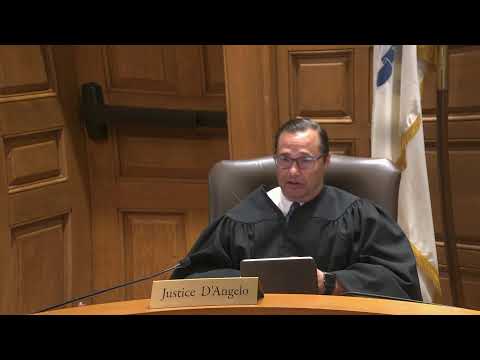
The panel heard argument in Cresta v. Cresta, a dispute over an attorney's fee lien after a divorce. Counsel for the husband argued the probate judge erred in establishing and then allowing partial enforcement of a lien without proper process and that a later contempt enforcement proceeding should not have been used to enforce the lien. Counsel for the attorney argued the probate court retained statutory authority to determine the lien amount and that liens under the statute attach by operation of law to recoverable proceeds.
Attorney Michael Rutecki (arguing for the husband) told the court the May 31 order establishing an amount for the attorney's lien was unauthorized and that the subsequent contempt enforcement in a separate proceeding—during which a special master was appointed to liquidate assets—should have been brought in superior court under the statute. "The statute, section 50B ... is very clear saying if there's no case pending in the probate court, then she must go to the superior court," Rutecki said, citing the parties' briefing and precedent. He argued the probate court lacked authority to order enforcement after the divorce judgment was final and that the enforcement route taken improperly deprived the husband of protections associated with execution and attachment.
Attorney Robert O'Regan, representing attorney Martha Bagley, said the motion to establish a lien was filed before the divorce judgment and that the statute contemplates a two-step process: an inchoate (charging) lien that becomes a perfected lien when the court determines the amount. He argued the probate court had authority to determine the amount under the statute and cited Boswell and other cases recognizing the in-court procedures for attorney liens. "The statute contemplates that until the divorce judgment or any judgment in any trial court department where an attorney participated ... that trial court has jurisdiction under the statute to determine the amount of the lien," O'Regan said.
The justices pressed both sides on timing and appellate procedure: whether the husband had an immediately appealable order when the probate judge set the lien amount; whether the husband waived appellate review by not timely appealing; and whether a lien established in probate could be enforced through a contempt proceeding or required superior-court enforcement. The panel noted the record did not include the transcript of the hearing on the lien and discussed whether that absence affects review.
The court submitted the matter after argument. The outcome may hinge on whether the probate court's determination was appealable and whether the contempt enforcement procedure was an appropriate route to satisfy the attorney's statutory lien.