Get Full Government Meeting Transcripts, Videos, & Alerts Forever!
Get email alerts on the Search And Seizure topic
No spam. Unsubscribe anytime.
Appeals court considers whether exit order and car search were justified after traffic stop
Summary
The state appeals court on Wednesday heard argument in Commonwealth v. Atwary on whether police properly ordered a driver out of a car and searched the interior after a motor-vehicle stop for alleged tinted windows and an abrupt turn.
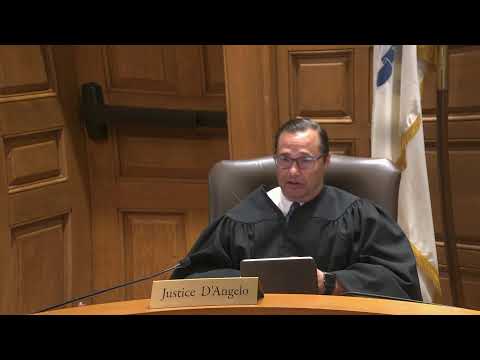
The state appeals court on Wednesday heard argument in Commonwealth v. Atwary on whether police properly ordered a driver out of a car and searched the interior after a motor-vehicle stop for alleged tinted windows and an abrupt turn. Attorney David Rotondo argued for the defendant; Assistant District Attorney Anne Kennedy represented the Commonwealth. Justices Rubin, DeAngelo and Toome presided.
Rotondo told the court officers approached during daylight hours on a busy street and did not have weapons drawn, and said the record lacks authority to justify approaching a vehicle with firearms out of mere reference to a "high-crime area." "I would argue that at that point there was not a heightened sense of a safety concern," Rotondo said. He challenged the search as unsupported by "specific and articulable facts," and emphasized the judge below never made a specific record ruling on the legality of the vehicle search after suggesting he would "look into" the question.
Kennedy responded that the motion judge properly denied suppression and credited the officers. She said the judge's findings and a subsequent transcript (dated Oct. 13, 2023) show the judge "denies the motion outright" and found officers credible. The prosecutor told the court that the officers observed furtive movement, the defendant's failure to keep the window down, and other facts that together justified an exit order and a limited, weapon-focused search of the vehicle. "The information that was sufficient to justify the exit order was also sufficient to justify the limited intrusion of opening the passenger car door where they saw the defendant reach," Kennedy said.
At issue is whether the exit order and the protective sweep of the car (the limited look under the passenger-seat area where officers testified they saw movement) met the objective reasonableness standard. The justices questioned whether the officers had time to pat-frisk the defendant immediately after ordering him out and whether the timing of the officers' movements made a protective search necessary. Justice DeAngelo observed that an officer who testifies he saw the defendant reach toward the passenger seat and then found a gun "is either right or wrong," but that the law requires more than ambiguous, nervous movements in many cases.
The parties also debated the record below. Rotondo said Officer Dutton, who allegedly approached the driver's side and had a clear view, did not testify at trial; the Commonwealth said the other officer's testimony was sufficient and that the defendant did not call Dutton. Kennedy emphasized that the motion judge credited the testimony of Officer Bissonnette and denied suppression on the totality of the circumstances.
The case was submitted to the court after argument. The appeal focuses on whether the exit order and subsequent limited search satisfied constitutional standards for protective searches of automobiles and whether the trial record supports the judge's denial of suppression.