Get Full Government Meeting Transcripts, Videos, & Alerts Forever!
Get email alerts on the Zoning Text Amendment Highway Major Retail topic
No spam. Unsubscribe anytime.
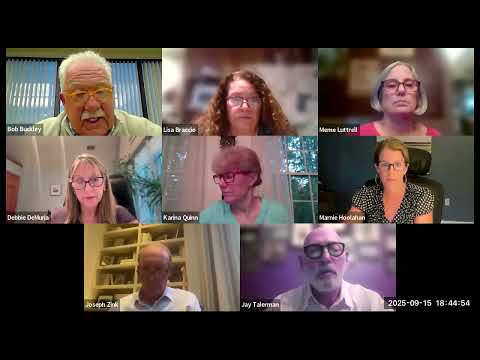
Southborough planning board keeps public hearing open on Route 9 zoning amendment after debate over overlay, parcel limits
Summary
The Southborough Planning Board held a public hearing on a proposed text amendment to allow a large single‑tenant retail use on Route 9, debated whether to use an overlay or a text amendment limited to specific parcels, and continued the hearing to Sept. 29 as members pressed for clearer mapping, notice and procedural protections.
Southborough’s Planning Board on Sept. 15 continued public hearings on a proposed zoning text amendment to allow a large single‑tenant “highway major retail” use on Route 9, after members debated whether the change should be an overlay district, limited to specific parcels, or handled by a targeted text amendment and asked for clearer map, notice and process safeguards.
The amendment before the board would permit a single large retail user on a targeted set of lots in the town’s Industrial Park (IP) district subject to criteria including a minimum combined lot size and limits on gross floor area. Proponents said the change is intended to allow a national retailer the proponent is negotiating with to consider the site; Bob Buckley, attorney for the proponent, said, “That user, by the way, is Costco.”
The issue quickly split the board along procedural and substantive lines. Mimi Houlihan, chair of the Southborough Planning Board, said she supports developing the land but objected to drafting bylaw language produced by an outside law firm without what she called the board’s customary public vetting: “I am in favor of developing this land. I welcome the prospect of new tax revenue and greater convenience for our residents. But what I cannot support is a process where an outside law firm … draft zoning bylaw changes that will have permanent impact on our community without engaging in the same rigorous public standards we hold ourselves to.”
Town counsel Jay (Town Counsel) told the board that switching from a straight text amendment to an overlay can trigger new legal notice requirements and procedural risk. “If I’m being conservative … a new full new hearing notice would be required because an overlay district is substantively different,” Jay said, urging caution to avoid procedural challenges.
Proponent counsel and other participants said the draft text amendment had been written to be tightly targeted to the southerly side of Route 9 and that, in practice, an overlay and a narrowly tailored text amendment could produce the same substantive result. Buckley and other attorneys noted the draft includes a collar—criteria limiting where the use could be allowed—and suggested the same effect could be achieved by listing map and parcel numbers in the bylaw’s introductory language.
Board members pressed for specifics the draft did not yet provide. Several members asked for a clear map and for the draft language to identify which parcels would be eligible; one planning board member said she had found that one parcel in the proposed area is still owned by EMC and asked whether that ownership matters. Members requested clarity on lot‑size counting (the draft referenced 20 acres), whether wetlands or conservation land would be excluded from that total and whether the 50,000 square‑foot cap in the draft would be affected by a future change to the town’s IP district (members noted prior discussion of a 75,000 square‑foot threshold in the IP rewrite).
Board members also asked about waiver authority. Jay and proponent counsel agreed that, absent express waiver language in the bylaw, dimensional relief would require a variance from the Zoning Board of Appeals, and that variances are difficult to obtain. Jay explained that “we are building in some waiver processes” in other towns’ bylaws, but stressed any waiver mechanism must be explicit if intended.
Planning Board member Marnie Demuria said she remained uneasy about the pace and process: “My biggest concern is just pure process. It's the rigor that we take the time,” and she urged the board to consider an overlay as a means to protect other parcels along the corridor. Others echoed concerns that rushing the language could invite unintended consequences or confusion at town meeting.
Proponents signaled they plan community outreach. Marty Sink, a developer representative, said timing is often dictated by clients and market conditions and that potential tenants may pursue other opportunities if the zoning change is delayed. The proponent’s team also circulated a letter from Planning Board member Alan Balniak, who wrote he strongly encourages the board to “embrace” the change and cited potential tax‑base benefits.
The board agreed to keep the public hearing open and continue to Sept. 29 at 7 p.m., allowing staff, counsel and proponents to refine draft language, produce a clear map of affected parcels, and address notice, ingress/egress wording, conservation/wetland counting and the permit‑granting authority question. Members emphasized that any final article will be subject to a planning board report to town meeting and, ultimately, a town meeting vote.
The proponent said it plans neighborhood outreach to present benefits and operational details, and board members asked that the planning board be informed of those sessions. The select board has indicated it intends to place the article on the special town meeting warrant; board members noted that warrant language should be settled in advance to avoid last‑minute floor amendments.
Next steps: the Planning Board will hold additional hearings (the next is scheduled Sept. 29), refine the draft bylaw language with counsel and staff, and return to the board before the article is finalized for the warrant and for the planning board’s mandatory town meeting report.