Get Full Government Meeting Transcripts, Videos, & Alerts Forever!
Get email alerts on the Alc Identification And Testing topic
No spam. Unsubscribe anytime.
District staff explain ALC testing process and 'top‑percentile' guideline; parents ask for score distribution and cohort data
Summary
District staff described the district’s screening and testing process for Advanced Learner Center admission — including use of CogAT and teacher/parent referrals — and said district guidelines target the top ~5% for specialized ALC placement, though the district has historically invited a larger share to fill classes.
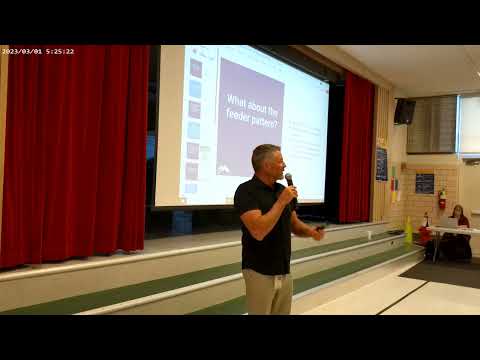
At a Granite School District community meeting, district assessment and ALC staff described how they identify and invite students for the Advanced Learner Center (ALC).
"At the end of kindergarten for the advanced reader program, we do the COGAT," said Kyle Anderson, district staff and principal who presented the testing slides. "We do the subtests, two different tests there, the verbal and the nonverbal. Then at the end of second grade… we add the quantitative." Anderson described a multi‑step process that starts with parent and teacher recommendations, followed by assessment‑department ranking and invitation to testing.
District guidance and practice: Staff said the district’s written guideline intends specialized ALC services to serve roughly the top 5% of students in the relevant area, but during recent years the district has invited a wider range to fill classes; Anderson used recent East Side third‑grade data to show invitations had reached about 9% in that cohort and that, in some years, invitations have gone as high as the top 15–20% to maintain class sizes.
Why parents pressed for data: Multiple parents asked staff to publish anonymized score distributions by feeder school so families could see whether local cohorts are over‑ or under‑represented and to assess how moving an ALC site would change access. Staff agreed to post additional data and suggested community members submit specific questions about what additional analyses they would like.
Classroom practice: Anderson and staff emphasized the district’s view that the ALC is intended for students whose needs are difficult to meet in a general classroom — a small portion of the population — and that each neighborhood school also maintains a continuum of services for other high‑ability students.
Ending: Parents asked for three‑to‑five year cohort distributions and anonymized score ranges by feeder school; staff committed to post data and meet with school councils to explain selection and testing results.