Get Full Government Meeting Transcripts, Videos, & Alerts Forever!
Get email alerts on the Child Welfare Active Efforts topic
No spam. Unsubscribe anytime.
Pine County officials warn new ‘active efforts’ child‑welfare law will strain staff and budgets
Summary
Pine County Health and Human Services officials told the county board that the Minnesota African American Family Preservation and Child Welfare Disproportionality Act (MAPPA/CWDA) will require significantly more staff time and services than current state reasonable‑efforts standards, raising budget and staffing needs ahead of the law’s Jan. 1, 2027 effective date.
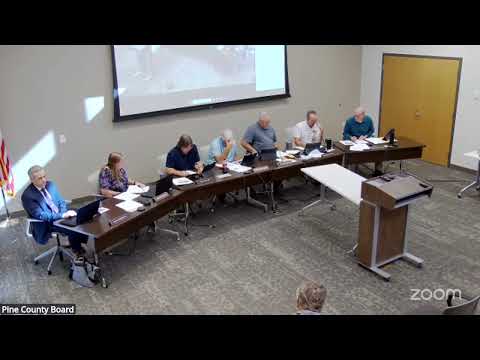
Pine County Health and Human Services officials told the county board that a new state law requiring “active efforts” to preserve families will dramatically increase staff time, service costs and operational demands on local child protection work. Becky Fossum, Pine County’s health and human services director, told commissioners the Minnesota African American Family Preservation and Child Welfare Disproportionality Act (commonly called MAPPA or CWDA) takes effect Jan. 1, 2027, and “really demands more in terms of staff time and resources compared to reasonable efforts cases.” Fossum said the county’s fiscal analysis found the change could require adding at least another child protection supervisor and administrative support and would raise recurring costs for services and staff time. “When we did our assessment in house, we determined that we would need a lot more staff,” Fossum said. Why it matters: officials warned the act, modeled on the Indian Child Welfare Act (ICWA), raises the legal standard counties must meet when working to keep children in their homes or reunify families. Local agencies will face additional court scrutiny and the county could face financial exposure if it cannot demonstrate required efforts. What county staff told the board - Fossum said MAPPA/CWDA passed with bipartisan support in the Minnesota Legislature and that local agencies must now prepare for the higher standard. “The law takes effect for Pine County on 01/01/2027,” she said. - Child protection staff brought two case examples to show how labor- and cost-intensive active‑efforts work can be. One multi-family ICWA case opened in 2020 and, Fossum said, had already required roughly $350,000 over 4½ years for placement, travel, housing and other supports without achieving reunification. Child protection worker Britney Hoagland and supervisor Beth Jarvis described paying rent deposits, hotel stays, taxi rides for supervised visits, food cards and other supports to enable parental participation in services. - A typical “reasonable efforts” case the team presented had generated about $51,000 in service costs for children and parents and 255 staff hours over three months for a single caseworker; staff said active‑efforts work could double that time commitment per case. Board and staff discussion Commissioners asked whether some tribal practices, such as preferences for transfer of custody rather than termination of parental rights, affect how long cases remain open. Staff replied that tribal policies and the tribe’s chosen permanency options can extend timelines and affect cost and outcomes; staff said tribes like Mille Lacs Band of Ojibwe may not pursue termination of parental rights and instead pursue transfer-of-custody options. Board members and staff discussed whether the Legislature will delay or change the law; Fossum said she had not seen signs of a statewide delay and that Hennepin and Ramsey counties have already started implementation. Next steps and recommendations Fossum recommended the county begin planning for increased staffing and budgeting for expanded service costs. She urged commissioners to engage state legislators and state partners to clarify funding and implementation details and to press for resources to support the higher statutory standard. No formal board action was taken; the presentation was informational and intended to guide budget and personnel planning. Ending: Commissioners acknowledged the presentation and said they would consider staffing and budget adjustments as they finalize the 2026 levy and discuss long‑range implications for county services.