Get Full Government Meeting Transcripts, Videos, & Alerts Forever!
Get email alerts on the Public Safety topic
No spam. Unsubscribe anytime.
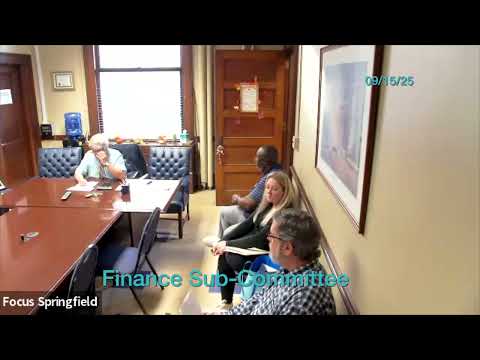
Finance committee reviews FY26 master agreement funding clinicians for crisis-response
Summary
The Finance Committee heard details about a FY26 master agreement to accept grant funds that pay for behavioral health clinicians who join police crisis responses; staff said the clinicians provide about 65% coverage and the city is a pass-through fiduciary for the funding.
The Finance Committee on Sept. 15 heard staff describe a FY26 master agreement that will bring grant funds to pay behavioral-health clinicians who respond with police to crisis calls. Lieutenant Elliot of the police department said the grant pays for the clinic component of the city’s crisis-intercept program.
The funding matters because clinicians on scene are part of a broader modern policing strategy to de‑escalate crisis calls and provide clinical assessment and care. “This money pays for our 9‑1‑1 connecting crisis intercept team,” Lieutenant Elliot said. “When somebody calls in during crisis ... we have clinicians that we send to the call.”
Members asked how the clinicians are deployed and where the funds go. Elliot said the clinicians are not on duty 24/7 but provide about “65% of our coverage.” He also stated the city serves as the fiduciary: the grant funds are a straight pass-through and the city invoices the grantor and pays the clinician provider. “It's a straight pass through,” Elliot said. Committee members confirmed the clinicians are sent whenever available and that officers still respond when public‑safety concerns exist.
Committee members discussed one real-world example from a member of the public in which officers kept their distance while another unit familiar with a resident intervened; Elliot said those circumstances can be community‑caretaking cases or mental‑health incidents and each incident is assessed on arrival. He summarized the department’s approach: when a call appears to be an acute mental‑health crisis clinicians are engaged; when public safety is at risk police take the lead.
No formal vote specifically on this grant was taken at the committee during the early part of the meeting; the committee later moved an omnibus motion approving items 1–9 to forward to the full council. According to the minutes, staff will present the item at the full council meeting for final acceptance and execution.
The presentation named BHN (behavioral health network) as the clinical provider partner and indicated the city receives the grant from the state department of mental health (as described in the meeting). The committee did not provide a line‑item dollar amount in the discussion recorded in the transcript.
The committee chair and staff said they would present the grant at the full council meeting and that, if necessary, additional police or program staff could join that meeting to answer questions.