Get Full Government Meeting Transcripts, Videos, & Alerts Forever!
Get email alerts on the Code Enforcement Nuisance Declaration topic
No spam. Unsubscribe anytime.
Homewood council declares property a public nuisance, gives owner 30 days to clean up
Summary
The Homewood City Council voted 9–1 to declare a property a public nuisance and gave the owner 30 days to abate the condition or face city cleanup and a lien on the property (Resolution 25‑161). Councilors debated carrying the hearing or starting the 30‑day clock immediately.
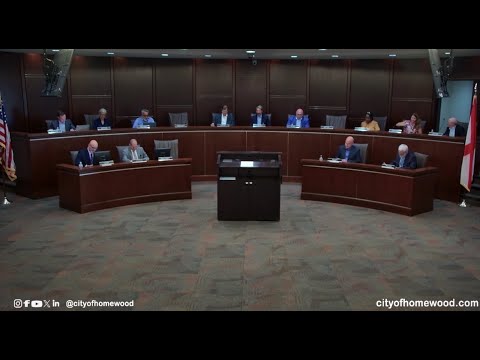
The Homewood City Council voted 9–1 on Sept. 15 to declare a privately owned parcel a public nuisance and give the owner 30 days to remove debris and other hazards, or the city will schedule cleanup and place a lien on the property. The council recorded the action as Resolution 25‑161.
Council context: City staff reported partial progress but said the property remained cluttered and that the owner was attempting much of the work without hired help. Staff recommended either carrying the public hearing for a status check or declaring the nuisance now so the 30‑day remedy period would begin.
During discussion, a council member said a neighbor reported the condition had existed “for a long time,” and staff described the owner’s current approach as sorting and removing material item by item. Staff also said roughly half of the visible debris had been removed since earlier inspections. Councilors debated whether to hold the public hearing open, carry the item to a later meeting, or declare a nuisance immediately. One councilor asked whether volunteer groups such as local scouts could help; staff advised against that option.
Procedural steps and outcome: The council president closed the public hearing before the vote. A motion to declare the property a public nuisance was made, seconded by Councilor Baloney, and approved 9–1. Under the ordinance cited by staff, the owner has 30 days to remedy the condition; if they fail to do so the city may abate the nuisance and place a lien on the property for the cost of abatement. Staff cautioned that if the council had voted to deny the motion, the entire enforcement process would have to be restarted.
What happens next: The 30‑day clock begins from the council’s declaration. Staff will monitor compliance and, if necessary, schedule city abatement and file a lien for costs.