Get Full Government Meeting Transcripts, Videos, & Alerts Forever!
Get email alerts on the Legal Training topic
No spam. Unsubscribe anytime.
Town attorney briefs New Canaan wetlands commissioners on interventions, hearings and conflicts
Summary
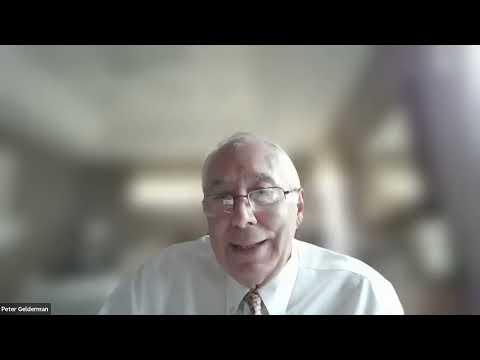
At a Sept. 15 meeting, town attorney Pete Gelderman gave the Inland Wetlands Commission a legal training on rules for petitions to intervene, public-hearing thresholds and evidence standards, plus guidance on ex parte contacts, site visits, peer review and recusal.
New Canaan — Town attorney Pete Gelderman gave a legal briefing to the New Canaan Inland Wetlands Commission on Sept. 15 that covered when third parties may intervene in proceedings, when the commission must hold public hearings, how the record and expert evidence determine outcomes, and safeguards against improper outside contacts. "There's a state statute 22 a dash 19, which permits any person to file a verified petition for intervention in any, administrative matter," Gelderman told the commission, explaining that an intervention petition must be sworn, must allege specific facts about likely unreasonable pollution to wetlands or watercourses, and can make the petitioner a party to the proceeding.
Gelderman told commissioners they generally should vote on the underlying permit application first and then separately decide whether an intervener met the burden to show unreasonable pollution. "If a application is you deem has no adverse impact on a wetland or watercourse, then it's almost certain that the intervener hasn't met their burden," he said. He described the practical effects of party status: interveners receive copies of filings, may present extended testimony and can rebut evidence, although the applicant gets the last word at hearing close.
Why it matters: decisions by the commission are reviewed on the administrative record, and courts look for "substantial evidence" — typically expert reports or testimony — to uphold local determinations. "Most importantly, it's, supported by substantial evidence in the record. And substantial evidence means expert testimony or reports," Gelderman said, noting that without contrary expert evidence the applicant's expert may constitute the sole substantial evidence supporting approval.
Gelderman reviewed procedural thresholds. Under state law, the wetlands agency need not hold a public hearing unless one of three circumstances exists (for example, a petition to hold one, a determination that the matter is in the public interest, or a finding that the activity may have an adverse impact). He summarized the timetable: if no hearing is required, the agency generally has 65 days from receipt of an application to decide; if a hearing is held, the commission must open the hearing within that same initial 65-day window and, after closing, has 35 days to decide.
He discussed peer review and costs: the commission may hire a peer reviewer to evaluate applicant-submitted reports and may charge the applicant for that review when a public hearing is held. "You can hire a peer reviewer if you feel it's... in the best interest to have someone take a look at the data being provided to you by the applicant," he told the commissioners. Town staff member Kathleen Holland confirmed the commission’s regulations require a petition to hold a public hearing to be signed by 25 town residents.
Gelderman also advised against ex parte contacts. "If somebody approaches you and starts talking about a pending application, you just have to hold your hand up and say, stop. I can't we can't have this conversation," he said, urging commissioners to direct commenters to the public meeting. He reviewed site-visit practice: visits are observational, not recorded; if a quorum will be present the visit must be legally noticed; and an applicant must consent to any entry onto private property.
On evidence and findings, he cautioned that allegations of harm must be quantified in the record. "When you're determining that an activity is gonna have an adverse impact on a wetland, you can't just make a decision... Some expert has to tell you not just that dirt's gonna go in there... They have to identify what the adverse impact of that dirt is going to be," he said.
Commissioners asked clarifying questions about questioning witnesses, peer review, and the limits of questioning during open hearings. Sandy Redden asked whether commissioners should challenge witnesses who appear untruthful during testimony; Gelderman advised asking clarifying questions in a polite manner and reserving stronger credibility assessments for deliberations. "You can make that determination when you're sitting in your deliberations," he said.
The training closed with a final reminder about recusal: individual commissioners must decide whether a personal or financial conflict exists and should remove themselves from proceedings and the meeting room when recusing. "Recusal is an individual decision," Gelderman said. "If you recuse yourself, by the way, you ought to leave the room, not just go sit in the audience."