Get Full Government Meeting Transcripts, Videos, & Alerts Forever!
Get email alerts on the School Finance topic
No spam. Unsubscribe anytime.
Anthony Wayne board approves financial forecast and appropriation resolution after nexus settlement boosts revenue
Summary
The board approved the district’s updated financial forecast and appropriation resolution, citing a $2.3 million nexus back‑payment and an anticipated $3.1 million annual pipeline payment while noting continuing uncertainty from a contested TIF and high contracted special‑education costs.
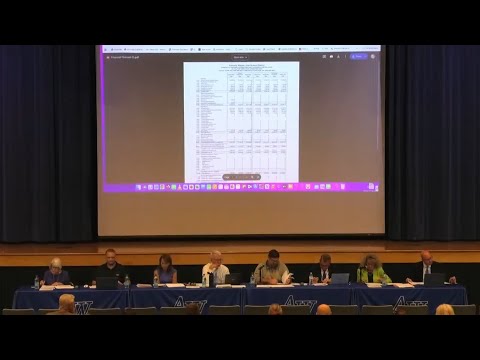
The Anthony Wayne Local School District Board of Education voted to approve the August financial reports, the district’s financial forecast and the appropriation resolution as presented, Treasurer Carrie Johnson said at Tuesday’s meeting.
Treasurer Carrie Johnson told trustees the district received a $2.3 million back payment from a nexus settlement and that the value of a pipeline property has been set to generate about $3.1 million annually. She said the changes contributed to a stronger projected cash position: "we expect to have a cash balance on 06/30/2026 of $5,700,000," Johnson said during her presentation.
Johnson also described procedural changes to the forecasting process. A recent state budget change replaced the former five‑year forecast with a new financial forecast that contains three years of history and three years of projection; the forecast will now be due to the state by Aug. 31 and again in February. Johnson told the board the district presented the forecast early because of the meeting schedule and that the document would be posted on the district website.
On revenue details, Johnson said real estate taxes remain the district’s largest funding source. She also said the district received about $225,000 in a state performance supplement tied to higher report‑card ratings. On the expenditure side, she said purchase services —which include utilities, repairs, insurance and contracted services for special education — have increased, in part because the district must encumber purchase orders and contracted placements when forecasting appropriations.
The district’s treasurer and superintendent also addressed a contested tax increment financing (TIF) arrangement involving the Fallen Timbers Mall. Johnson said a 17‑ or 18‑year‑old TIF requires property owners to meet certain thresholds before contesting valuation; the mall’s assessed value in the agreement is $88,800,000 and its current value on the tax rolls was about $83,000,000. The mall owner filed a contest in January and asked the board of revision to lower its value; the district testified in defense of the TIF and expected a decision in the coming weeks, Johnson said. Because the mall has reduced payments recently, Johnson noted the district has not received expected amounts and has reflected that uncertainty in its forecast assumptions.
The board also approved federal grants and several housekeeping items: switching the district’s 403(b)/457 provider from PlanWithEase to US Omni/TSACG following the vendor’s exit; and returning $14,403.27 in stale‑dated/unclaimed funds to the general fund per administrative guidelines. Johnson explained unclaimed payroll and warrant checks that go uncashed are moved into a stale‑dated fund after 90 days and may be returned to the general fund after five years; she said checks would still be reissued if claimants come forward.
During discussion, Superintendent Kevin Herman and board members emphasized fiscal prudence despite the one‑time nexus payment, with Herman saying the district would remain conservative in spending to rebuild reserves after years of low carryover.
When the motions to approve the financial reports, forecast, federal grants, vendor change and unclaimed funds were called, the roll calls recorded affirmative votes by the board members present and the items passed.
The board also was briefed on aid categories that had shifted: slight increases in unrestricted state aid offset by decreases in some restricted state programs, and continued federal support for programs that fund about 21 staff members (those funds are managed outside the general‑fund forecast), Johnson said.