Get Full Government Meeting Transcripts, Videos, & Alerts Forever!
Get email alerts on the Fire Department Operations topic
No spam. Unsubscribe anytime.
Commission asks staff to study cost recovery for nontransport calls, alarms and assisted lifts at assisted‑living facilities
Summary
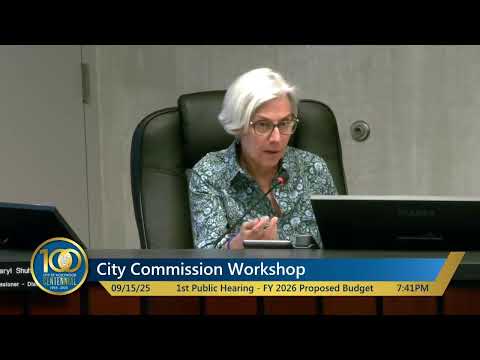
Commissioner Hernandez asked staff to research whether the city can recoup costs from assisted‑living facilities (ALFs) and at‑fault nonresidents for nontransport calls and false alarms; staff agreed to return with an informational report.
Commissioner Hernandez asked the city manager and fire leadership to investigate options to recover costs when crews respond to nonemergency calls tied to assisted‑living facilities and for repeated false alarms. Hernandez described frequent calls where crews are asked to "pick up" residents or respond to lift assists and argued that facility operators — not the general taxpayer — should bear some costs for nonemergency responses.
The issue is significant because staff said these nontransport responses and repeated false alarms tie up staffed apparatus and personnel who could otherwise be responding to emergencies. Commissioner Hernandez urged staff to explore approaches used by other municipalities, including charging facilities or vehicle operators for nontransport or nonemergency responses when legally permissible.
City officials supported an informational report: the city manager and other commissioners agreed to direct staff to return with legal and policy options. Commissioners noted limits under state law that might restrict fee authority and asked staff to assess liability and unintended consequences, such as discouraging necessary 911 calls from vulnerable residents. Commissioner Calari and others emphasized that many ALF residents are on fixed incomes and that any program must balance cost recovery with equity and public safety.
The chief and city attorney were referenced in the exchange; the commission agreed that staff should bring back an informational report that outlines legal authority, examples from peer cities, revenue potential, enforcement mechanisms and safeguards for vulnerable residents. No ordinance or fee was proposed or adopted at the Sept. 15 hearing.