Get Full Government Meeting Transcripts, Videos, & Alerts Forever!
Get email alerts on the Landfill Closure Redevelopment topic
No spam. Unsubscribe anytime.
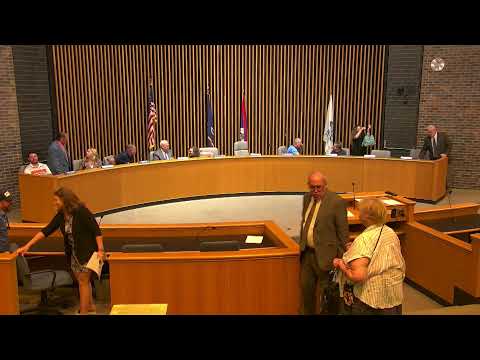
Riverview council says no further landfill expansions; officials, residents debate financial legacy and redevelopment
Summary
Riverview officials said they will not seek additional landfill expansions and discussed next steps for replacing revenue, PFAS management and possible redevelopment of part of the golf course. Residents raised questions about reserve funds used for prior cell construction.
Riverview Mayor Swift and city council members said the city will not pursue future landfill expansions and discussed options to replace the revenue the landfill once provided, including redesigning part of the municipal golf course for housing. The council removed agenda item 9.2, the contract for a golf course architectural master plan, to allow the planning commission to review the proposal before it returns to council.
The decision matters because the landfill historically supplemented the city general fund by $1 million to $3 million per year, council members said, and closure and post-closure responsibilities will change that revenue stream. Residents and a council member raised concerns about whether prior reserve funds set aside for closure were spent and whether the city preserved sufficient funds for long-term PFAS management and closure costs.
During public comment, Sally Sullivan criticized the city’s handling of the landfill process and the council’s communication in a recent newspaper article, saying the city repeatedly renewed approvals and mismanaged the issue. “You were courageous then, but all of a sudden you’re not courageous anymore,” Sullivan said, addressing Mayor Swift and council members.
Resident Ken Kiellman cited the city’s 2016 financial statement note that, he said, reported $40 million in a closure/post-closure trust and argued funds were drawn from that reserve to build landfill Cell 7 rather than held for closure. “If we would have left the money there … we would have had that $60 to $70 million in the account,” Kiellman said, urging the council to account for the withdrawals and long-term financial exposure.
Mayor Swift responded with a brief chronology: he said the council and staff made multiple attempts to meet county requirements for expansion, that local partners declined requests to move an entrance and that the city paid cash for some capital work rather than bond financing. He said the city will need piecemeal solutions to replace lost landfill revenue and noted a redesign of the golf course that includes housing could yield additional tax revenue. “We’re not going to get a million and a half to $3,000,000 a year from the dispensaries. That’s how it was sold. That’s never gonna happen,” Swift said.
Council members and staff also discussed PFAS — man-made contaminants that can appear in landfill leachate — and planning for a PFAS treatment facility. Mayor Swift said the city’s PFAS treatment plant options range widely in scale and cost and that an earlier study-session option that used reverse osmosis would have been larger; the council said they now expect a much smaller plant tailored to the volume of PFAS the city must treat for decades after the landfill closes. “It’s going to be a much smaller plant,” the mayor said; he also referenced a potential cost figure mentioned in the meeting of about $20 million for a larger plant.
Action and next steps: Council removed item 9.2 from the agenda so the planning commission can review the golf-course master-plan proposal; no final decision on redevelopment was made. The council approved the consent agenda that includes other items but did not vote tonight on any landfill-specific bond or redevelopment contract. Councilmembers said they will explore multiple revenue-replacement strategies and return with refined proposals.
Discussion-only points included resident complaints about past reserve withdrawals, questions about whether money set aside for closure was used for Cell 7, and technical questions about PFAS handling capacity. Directional items included the removal of 9.2 for planning-commission review and a stated commitment to pursue piecemeal revenue options. There was no ordinance or land-sale approval at the meeting.
The record shows visible community concern about long-term costs and accounting for prior capital decisions. The council emphasized that any redevelopment or sale decisions will return to the council for formal action and that closing the expansion issue does not resolve longer-term financial and environmental responsibilities.