Get Full Government Meeting Transcripts, Videos, & Alerts Forever!
Get email alerts on the Recreational Vehicles topic
No spam. Unsubscribe anytime.
Opaloca holds workshop on proposed RV parking, registration and enforcement rules
Summary
City staff and commissioners on Sept. 15 held a public workshop on proposed amendments to a 2024 ordinance restricting recreational vehicles on residential property, discussing a proposed annual $150 registration, limits on parking and use, inspection procedures and penalties; no formal vote was taken.
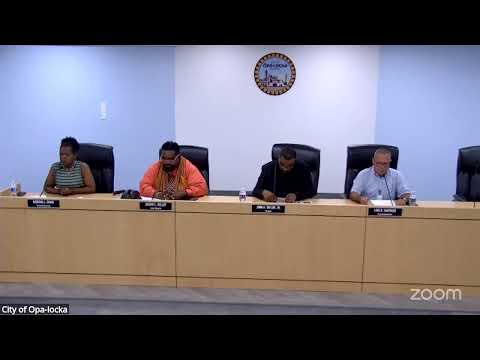
City of Opaloca staff and elected officials held a public workshop on Sept. 15, 2025, to discuss proposed amendments to the cityordinance enacted in 2024 restricting recreational vehicles (RVs) on residential property, including proposed registration, inspection, parking and enforcement rules. The workshop, led by Gregory Gay, director of planning, brought staff presentations and public comment but produced no formal action.
The proposed changes would allow one recreational vehicle up to 30 feet long to be parked on a residential lot in single-family and two-family zones if specific conditions are met: it must remain on its tires and be fully visible (not screened or enclosed), display current state registration and license plates, not be connected to water, sewer or electrical services, and not be used for living, sleeping, cooking or storage. Under the staff recommendations discussed, owners would register each RV annually with the city, pay a proposed $150 registration fee and submit an affidavit that the vehicle will not be used for habitation.
Why it matters: The proposal would reverse an earlier blanket prohibition and create a compliance, inspection and enforcement regime that affects homeowners, visitors and property values while raising questions about fees, privacy and inspection access.
Most important details first: Staff said the registration would require proof of vehicle title and current DMV registration and an annual inspection report showing compliance with the no-connection and non-occupancy rules. The city would issue a registration sticker for the RV to display. Staff described a proposed education period of about 30 to 45 days after adoption, followed by a compliance period; repeated noncompliance could lead to fines, administrative actions and removal of the vehicle at the owner—s expense.
Specific limits and enforcement described at the workshop include: a single RV per residential property; a maximum length of 30 feet; the vehicle must remain on its tires; no hookups to water, sewer or electric; visible license plates and current registration; annual city registration with a $150 fee (proposed); an affidavit that the RV will not be used for habitation; and an inspection and sticker indicating compliance. Staff said initial violators would receive warnings and seven- to 30-day correction periods; continuing violations could carry fines of $500 per listed violation (illegal storage/parking, illegal connection to utilities, use as dwelling, failure to register). Staff also said the city could pursue additional remedies under the City Code, including administrative adjudication, revocation of permits, and orders to abate nuisance conditions.
During public comment residents pressed two consistent concerns: the proposed $150 annual fee (one commenter called it "an abuse" compared with other sticker costs) and whether city inspectors would be allowed onto private property. Gregory Gay and other staff repeatedly said inspections would concern the RV and its compliance (not the interior of the home) and that the legal department would be asked to clarify limits on inspection access. Commissioner Ailyn Bass told the audience she would not support waiving the fee: "esto no va a ocurrir, es algo que yo no voy a apoyar," and emphasized the need for inspections to ensure vehicles are not connected to utilities or used as residences.
Staff also addressed temporary parking for visiting RVs and commercial properties: the current focus is on single-family and two-family residential zones; commercial or industrial locations were not part of the primary proposal but could be considered later. Staff said one proposed technical requirement is that RV parking in some cases would need to be on a hard surface or driveway. The city noted that if a utility connection is discovered in violation, the city reserves the right to suspend water or sewer service consistent with state law.
No formal motion or ordinance adoption occurred at the workshop. Staff said the meetingwas for information, to gather community feedback and to refine draft language before eventual presentation for formal action. Staff committed to working with the city manager and the legal department on clarifications requested by residents, including inspection scope and temporary visitor parking allowances. The city also offered a contact (staff at the back table) for attendees who wanted to leave written comments or follow-up questions.
The workshop closed with staff and some commissioners thanking residents for attending and reiterating that proposed language remains under consideration; if adopted, staff said there would be a public education period followed by enforcement steps.