Get Full Government Meeting Transcripts, Videos, & Alerts Forever!
Get email alerts on the Special Education topic
No spam. Unsubscribe anytime.
Board reallocates IDEA funds for specialist to address chronic absenteeism and corrective-action items
Summary
The board approved reallocation of IDEA grant funds to create a community specialist position focused on learner engagement and attendance to address the district's state-identified corrective action areas, including chronic absenteeism for students with disabilities.
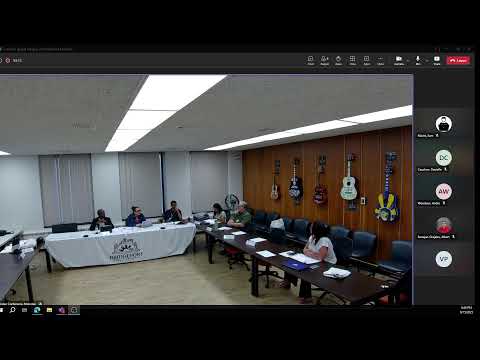
The Personal Board of Education voted to reallocate federal IDEA grant funds to create a community specialist position for learner engagement and attendance to support the district's corrective action plan. The staff proposal said the position is intended to address three corrective-action areas identified by the state: disproportionate suspension and expulsion rates for students with disabilities, timely correction of noncompliance, and chronic absenteeism for students with disabilities.
District special education staff explained the reallocation is part of the state-required corrective action work after a systemic complaint originating in the 202026ndash;2021 period. Staff said the state advised the district that IDEA funds should be used to address the noncompliance; if the district does not amend its use of funds, the state will intervene. The district described itself as currently at "level 1" intervention for IDEA.
Staff described the proposed duties for the community specialist as identifying chronically absent students (defined by staff as 10 or more days absent, including out-of-school suspension/expulsion days), working with campus attendance teams and administrators, conducting home visits and family outreach, coordinating with community resources, preparing monthly attendance reports, conducting family and student surveys to identify barriers, setting individual reengagement goals, and providing professional development to campus staff.
Staff said the position would specifically be assigned to two programs with high chronic absenteeism data: the Bridgeport Learning Center (BLC) and the Transition Academy. Staff reported historical chronic-absence rates for the 202326ndash;24 data: BLC at 67.8% and Transition Academy at 35%. Staff also reported more recent snapshots showing improvement during the year (for example, a September snapshot listed BLC at 40% and Transition Academy at 23%), but noted rates had risen in prior years without targeted intervention.
Board members pressed staff on alternatives and constraints. One board member asked whether IDEA funds could instead pay for classroom paraprofessionals or substitute coverage to address in-class needs such as toileting and other direct student supports; staff said the state identifies the areas for corrective-action funding and that paraprofessionals for classroom coverage were not an allowable use under the state-identified corrective-action focus.
Staff proposed a salary range for the new, nonaffiliated position of $45,000 to $55,000 annually, estimating a take-home pay of roughly $30,000 after deductions. Board members also discussed whether the role should be 10 months or 12 months; staff recommended a 12-month appointment so the specialist could conduct outreach during summer months.
Motion and outcome: A motion to approve the reallocation of IDEA grant funds to support the special-education corrective action community specialist for learner engagement and attendance was made and seconded; the board approved the motion by roll call. Multiple board members recorded a "yes" vote on the roll call in the transcript.
Why it matters: The reallocation responds to a state corrective-action determination and directs federal IDEA grant resources to targeted attendance and reengagement work for students with disabilities. Board discussion highlighted trade-offs between administrative or outreach-focused roles and direct classroom support, and the board requested ongoing review and accountability.
What comes next: Staff will implement the reallocation, begin recruitment for the community specialist role, assign the position to BLC and the Transition Academy as described, and report back on outcomes and expenditure of IDEA funds to the board and state as required.