Get Full Government Meeting Transcripts, Videos, & Alerts Forever!
Get email alerts on the Ordinance topic
No spam. Unsubscribe anytime.
Commission discusses rewrite of ordinance 51 driveway amendments; schedules work session and asks staff and law to help craft language
Summary
Commissioners flagged problems with proposed ordinance 51 language requiring hard‑surfacing and the repair trigger; they agreed to prepare a work session and request staff and the law department to draft revised code language that addresses grandfathering/nonconforming uses and practical thresholds.
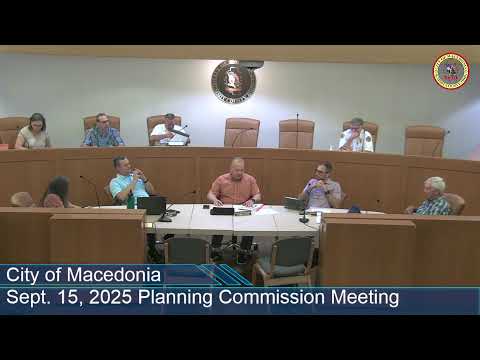
The Planning Commission spent an extended portion of its Sept. 15 meeting discussing proposed amendments (referred to as ordinance 51) that would require hard‑surfacing for residential driveways and parking areas. Commissioners and staff raised concerns about how the draft handles existing gravel driveways, the meaning of "repair" versus "maintenance," legal nonconforming status, and the potential for imposing costly retrofits on long‑standing driveways.
Commissioners and the law/administration representatives said the draft's use of terms such as "repair" could unintentionally force homeowners who perform routine maintenance (adding gravel) to replace entire driveways with concrete, which may conflict with Ohio nonconforming‑use statutes addressing lawful existing uses. "If you repair or expand it, you have to take your entire driveway and make it hard surface," a commissioner said, noting that the requirement could be unduly costly. Staff recommended looking at other cities' ordinances (North Olmsted, Sheffield Lake) that explicitly protect existing nonconforming conditions and suggested drafting language that focuses on the primary driveway from the street to the principal residence while allowing more flexibility for long back driveways to outbuildings.
The commission agreed to ask planning staff and the law department to prepare revised language. Commissioners requested a work session before the next meeting to identify priorities and to invite building‑department staff and, optionally, the council sponsor of the ordinance. The chair said the commission could send a formal request to council to hold ordinance 51 from progressing to third reading while the commission prepares recommended language.
No final ordinance vote occurred; the commission opted to develop clearer definitions and thresholds (for example, percent of repair triggering hard‑surfacing) and to coordinate with legal counsel before recommending code changes to council.