Get Full Government Meeting Transcripts, Videos, & Alerts Forever!
Get email alerts on the Police Drones Privacy Axon topic
No spam. Unsubscribe anytime.
Public hearing spotlights privacy, oversight concerns over Syracuse police drone program
Summary
Residents urged the Syracuse Common Council to delay approval of a proposed Syracuse Police Department drone policy and Axon contract, citing missing procedures, data-sharing risks, and potential surveillance of protests; the public hearing was closed and the legislation will be considered later.
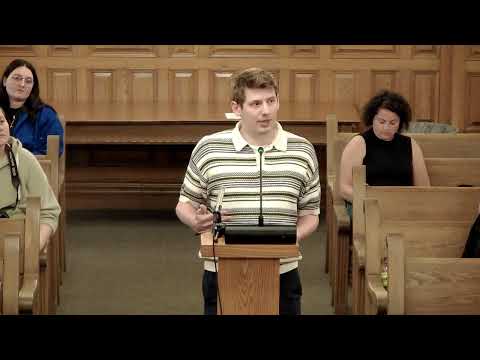
Syracuse — Residents told the Syracuse Common Council on Tuesday they want more limits and clearer procedures before the council approves a proposed revision to Syracuse Police Department (SPD) Policy 606 and a related agreement with Axon that would expand use of remotely operated drones.
Speakers at the public hearing said the policy rewrite and supporting contract lack needed safeguards on when drones may be flown remotely, how recorded images would be retained or shared, and what limits — if any — apply to surveillance of demonstrations and other public gatherings.
"This program is not ready for approval," said Barry Gewanter, a Syracuse resident, criticizing the proposal and urging the council to delay consideration until a new procedure document is drafted. "Remotely operated drones could be used for the management of in-process incidents...but not as a part of routine patrols or surveillance of First Amendment activity, absent an actual or real suspicion of a threat to officers or the public."
Leigh Cridland, of the Syracuse Peace Council, said the group has urged the city since 2013 to limit domestic drone use and said "unrestricted use of drones by the police is not acceptable." Cridland requested safeguards to prohibit drone surveillance of protests and public gatherings.
"This program would use military grade drones to police and surveil our communities," said Aaron Burnside, a graduate student and Syracuse resident, warning the council the program "has left [oversight] practically empty" and risks exposing residents' data to outside parties.
Several speakers cited contract language in Axon's master services and purchasing agreement that allows Axon to disclose data to government authorities as required by law or regulation, and they warned that SPD has previously shared data inadvertently through the city's Flock camera program. Davis Goldstein, a resident, told the council that since June 2024 Syracuse's data has been searched nearly 4,400,000 times by officers nationwide and that about 2,000 of those searches were labeled as immigration-related.
Speakers pointed to specific gaps they said exist between the proposed Policy 606 and the department's Procedure 602. Barry Gewanter and other commenters said Procedure 602, as they understand it, currently authorizes only line-of-sight drone operation, while the proposed policy removes prior sections that spelled out authorized uses and retention rules. "There is no longer any indication in the policy of who in SPD can authorize use of remotely operated UAVs or criteria they should use to evaluate a request for use or how that decision is made," said one speaker.
Commenters also raised technical and legal concerns: whether Axon-held or SPD-held video would be shared outside the city; whether drone video would be admissible in court and for how long it could be retained; and the risk of hackers accessing drone data. A speaker cited recent Federal Aviation Administration regulatory changes that allow some drones to fly beyond visual line of sight at altitudes up to 400 feet as increasing the program's potential reach.
No formal action was taken at the hearing. The presiding officer closed the public hearing and said the legislation would be considered later in the council's regular order of business.
The council record for the hearing includes written comments submitted to the clerk. Councilors will have an opportunity to consider the policy rewrite, the related Axon contract language, and any accompanying procedure updates before taking legislative action.