Get Full Government Meeting Transcripts, Videos, & Alerts Forever!
Get email alerts on the Strategic Vision Master Plan topic
No spam. Unsubscribe anytime.
Kalamazoo officials present Imagine Kalamazoo 2035 draft, seek public comment this winter
Summary
City staff presented a draft strategic vision called Imagine Kalamazoo 2035 at the Sept. 15 Committee of the Whole, saying more than 4,300 community contacts shaped goals that will guide a December public-comment period and inform the 2027 budget process.
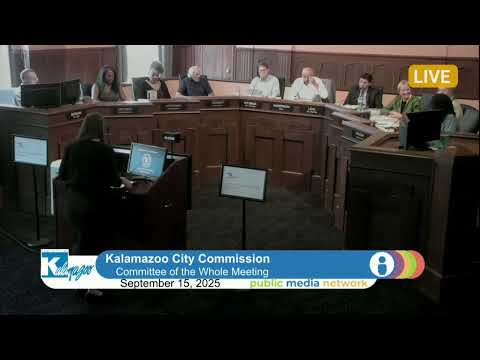
At a Committee of the Whole meeting of the Kalamazoo City Commission on Sept. 15, 2025, Chief Operating Officer Laura Lam and Deputy City Manager Rebecca Kick presented a draft of Imagine Kalamazoo 2035, a strategic vision and master-plan framework that city staff said is based on more than 4,300 community contacts and will open for public comment in December before the commission considers a draft in January.
The plan, presented as draft language that will be revised after further community engagement, is intended to guide the city’s work through 2035 and to inform the city’s master plan and departmental strategies. Lam highlighted past results she linked to the previous vision, Imagine Kalamazoo 2025, including work to build, preserve or rehabilitate more than 700 homes and $11 million invested in starting or expanding more than 500 small businesses. Lam also said the Foundation for Excellence endowment created after the 2025 process will help fund the community vision in perpetuity.
"In 2035, all Kalamazoo neighborhoods are supported by sustainable, responsive, and accessible services that lift people up and bring our community together at every stage of life," Lam said, presenting a working vision statement the city will test with residents. Lam and Kick stressed the language is draft and that staff will continue to refine goals and strategies with neighborhood groups and focus groups.
The draft frames five guiding principles—diversity, equity, inclusion and accessibility; economic mobility; sustainability; operational excellence; and continuous engagement—and seven draft goal areas: arts, culture and placemaking; community trust and safety; economic vitality; the environment; housing; transportation; and youth and family. Kick said housing is a new stand-alone goal for 2035, rising from work that in the previous plan had been woven into broader topics.
City staff described a three-phase process that began with broad outreach (the "Imagine it" phase), then public meetings and focused small-group conversations (the "Planet" phase), and will move into a "Design it" phase of drafting strategies, measures and implementation steps tailored to individual neighborhoods. Kick said the city has identified 22 neighborhood boundaries but does not expect every neighborhood to seek an immediate plan; staff said they hope to support 15 to 16 neighborhoods that are organized and ready to pursue planning work. The city also recently hired a neighborhood activator, staff said, to help neighborhood groups build capacity.
The presentation identified the Government Strategy Document (GSD) as the internal tool the city will use to translate the strategic vision into department strategies and staff-level responsibilities. Lam described the GSD as an "internal master plan" to ensure departmental accountability, training, and resources align with the community vision.
Commissioners asked for clarification on neighborhood-plan timelines, staff capacity and how the city will "Kalamazooify" best practices from other places. Kick said staff will study national models but adapt them to local conditions and community feedback. Commissioner Decker said she was "excited" that housing was a separate goal and pressed staff about how many neighborhood plans remain to be started.
Lam and Kick said the city plans to open a formal public-comment period on the draft in December and anticipates returning to the commission with the draft strategic vision in January so it can inform the 2027 budget retreat and subsequent master-plan work that will be more localized and neighborhood-specific.
The presentation concluded with staff inviting continued commissioner feedback and pledging additional community meetings and focus groups to refine outcomes, strategies and measurable indicators.
Next steps listed by staff included additional community outreach during the Design it phase, a December public-comment period on the draft strategic vision, and department-level GSD work to align internal strategies with the adopted community vision.