Get Full Government Meeting Transcripts, Videos, & Alerts Forever!
Get email alerts on the Housing And Zoning topic
No spam. Unsubscribe anytime.
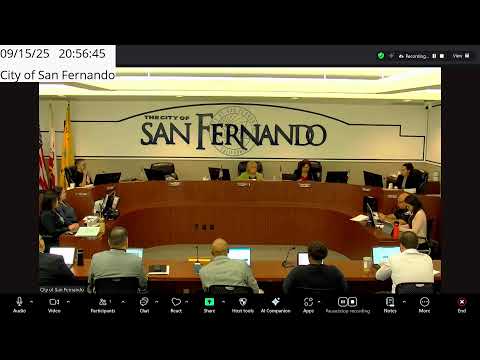
San Fernando hears plan to update zoning, historic survey and objective design standards to meet state housing rules
Summary
Consultants and city staff presented a state-funded program to update San Fernando's zoning code, historic property survey and objective design standards aimed at implementing the city's 2021'2029 housing element; council members raised questions about survey methods, density bonuses and local character.
San Fernando officials received a presentation on a state-funded housing element implementation project that would revise the city's zoning code, update a 2002 historic resources survey and create objective design standards for future housing projects. The consultants said the work flows from the city's adopted 2021'2029 housing element and REAP 2 grant funding and is intended to meet recent state housing requirements while protecting neighborhood character. "Our project is comprised of three main components: a zoning code update, a historic survey update, and objective design standards," said John Moreland, director of community planning at Rincon Consultants.
Why it matters: the updates are intended to bring the municipal code into alignment with recent state legislation and the city's housing-element programs so that housing applications can be reviewed under clear, measurable rules. Consultants said updating the city's 40-year-old zoning code and a 2002 historic survey will make review more consistent and help unlock grant funding for implementation.
Key details: Moreland said the project will consider updates to density-bonus incentives (noting Housing Element Program 5-7), incentives for large-family units, and new incentives tied to community benefits such as parks, open space or fully electric construction. The team proposed expanding the flexibility of commercial uses so neighborhood-serving retail allowed downtown could also be permitted along Maclay Avenue. Andrew (Drew) Watkins of JZMK Partners described the objective design standards (ODS) as measurable, diagram-driven regulations intended to remove subjective judgments from design review and speed approvals. Watkins said the ODS will include chapters on site design, building design, architectural styles (seven focal styles identified from the survey), and landscape. The consultants reported outreach to date: five pop-up events, more than 140 people reached and 78 survey responses with the survey remaining open through the end of the month.
Council questions and cautions: Councilmember Joe Fajardo asked whether the proposed list of architectural styles came from a local inventory or boilerplate; consultants said styles were drawn from the actual survey and varied in representation across the city. Councilmember Victoria Garcia pressed on survey methodology and demographics; consultants said they collected locational information, offered the survey in English and Spanish and that about half of responses were gathered in-person at pop-up events. Councilmember Patty Lopez supported allowing mixed-use retail with housing in the Maclay district and urged pet-friendly park elements in anticipation of more multifamily units. Several council members expressed concern about giving away additional density beyond the minimum state requirements and asked staff to be cautious about community preferences.
Next steps: consultants said they are concluding background research and expect to circulate draft materials for public review in early 2026, with formal hearings in spring 2026. The project carries a hard grant deadline of June 2026; consultants said they will return with draft zoning and objective-standard documents and an engagement summary that shows who responded to the survey and where.