Get Full Government Meeting Transcripts, Videos, & Alerts Forever!
Get email alerts on the Vacation Rentals topic
No spam. Unsubscribe anytime.
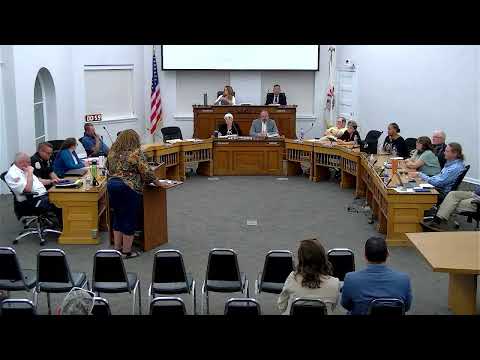
Freeport council begins debate to restrict short-term rentals in single-family zones after safety complaint
Summary
The Freeport City Council held a first reading on an ordinance that would remove short-term vacation rentals from single-family residential zoning and require duplexes and larger multiunit properties to seek special-use permits.
The Freeport City Council held a first reading on an ordinance that would remove short-term vacation rentals—commonly marketed via Airbnb and VRBO—from single-family residential zoning (R-1 through R-4) and require duplexes and larger multiunit properties to seek special-use permits.
Staff and the planning commission presented the proposed text amendment at the meeting; the planning commission held a public hearing August 14 and later recommended approval. Director Duckman told the council the amendment “is removing vacation rentals from the R-1 through R-4 residential district,” and that “if you have a duplex, 2‑unit, 3‑unit, 4‑unit, etc., it would be a special use permit.”
Public and council debate focused on competing concerns. Supporters of limiting short-term rentals cited a safety incident at one rental and said neighbors had been left to respond. Alderman Clem described an event where multiple vehicles arrived at a rental and police later “confiscated, I'm going to say, at least a dozen loaded weapons,” and said that sequence prompted neighborhood calls for stricter rules. An applicant and city clerk who testified earlier at the planning commission opposed a wholesale ban and urged use of the special-use process so neighborhoods that want rentals can allow them and those that do not can deny them.
Director Duckman told council that the draft ordinance would not immediately revoke existing licensed rentals; current license holders would be required to reapply. He said licenses would “sunset January 1, 2029,” after which no new licenses for single-family homes would remain valid. Council members repeatedly returned to enforcement and fairness questions: how many short-term rentals currently operate, whether the city would cap numbers, require local managers, or use guest limits and parking restrictions to limit nuisance activity.
Several council members urged caution before a final decision. Alderman Johnson and others noted the economic benefits from visitors who spend locally and suggested alternatives such as annual special-use permits or numeric caps rather than an outright ban. Supporters of the amendment said the special-use route would not stop neighborhoods from excluding rentals; opponents said a special-use requirement would be a fairer way to balance property rights and neighborhood character.
Next steps: This was the ordinance's first reading. Staff and the planning commission indicated they expect further public comment; council members said the ordinance will return for additional readings and debate before any final action.
Provenance: Discussion and planning commission background appeared in the September meeting packet and were discussed on the record during the first reading; staff provided a timeline for a sunset of existing licenses.