
Kissimmee receives annual red light camera report: 35,565 notices, $2.25M revenue reported
Get AI-powered insights, summaries, and transcripts
Sign Up Free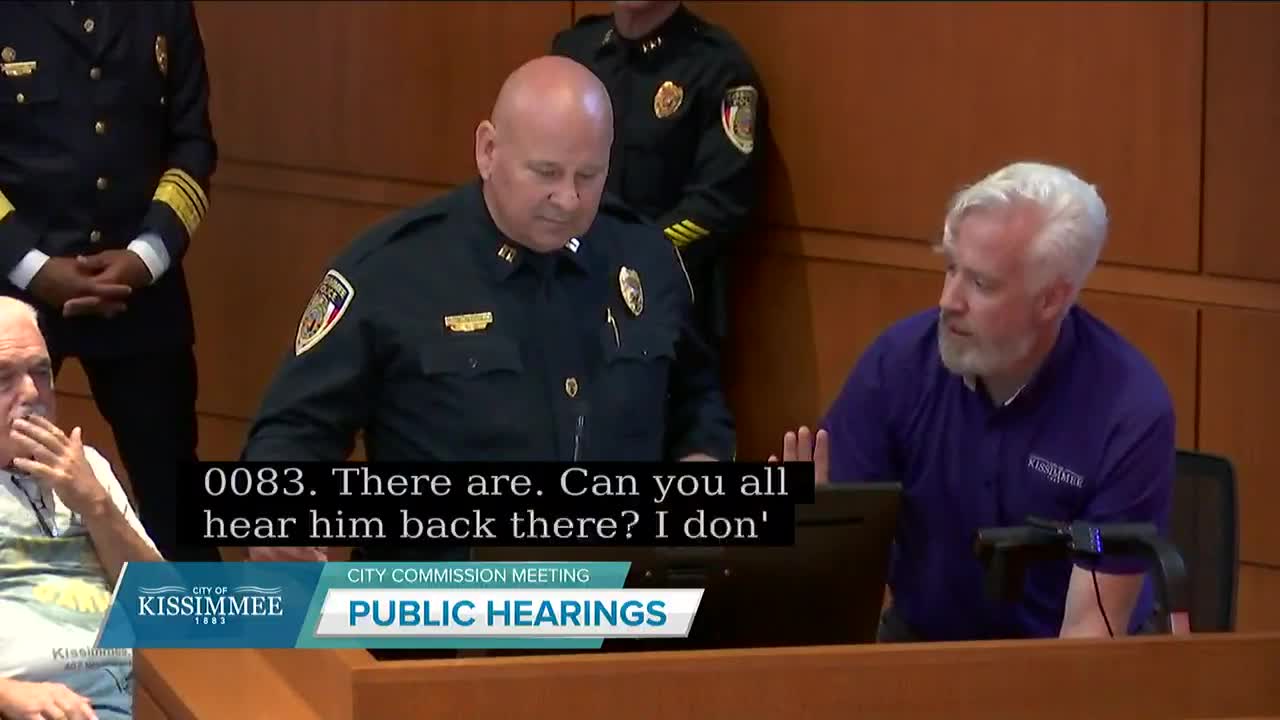
Summary
City staff presented the annual red light camera report covering 7/1/2024–6/30/2025: 35,565 violation notices issued, roughly $2.25 million collected, net proceeds earmarked for street improvements; staff said no camera additions or removals since 2018.
City staff presented the mandated annual report on Kissimmee’s red light camera program under Florida Statute 316.083, covering July 1, 2024 through June 30, 2025.
Mike Tilton (presenter) said the city operates cameras at 10 intersections with 19 cameras. Several intersections and camera installation dates were listed (many originally installed in 2012, one added in 2017 and two at Main and Vine added in 2018). Staff reported no camera additions or removals since 2018.
Over the 12-month reporting period the city issued 35,565 notices of violation; 21,570 of those notices were paid. Of the notices, 26 were contested at the time of reporting; 12 contested cases were pending a final outcome as of June 30 (six contests were upheld and eight dismissed). When a notice is not resolved within 60 days the system converts it to a uniform traffic citation; staff said 9,345 uniform traffic citations were issued during the reporting period.
Revenue and costs during the period: approximately $2,248,811 in gross receipts (split in reporting between providers due to a mid-period vendor change), with $627,119 attributed to Redflex and $1,003,878 to Vera Mobility during their respective contract periods. Staff reported $933,410 in camera operation expenses, $16,531 in convenience fees, a municipal clerk salary allocation of $74,960 and combined part-time police officer salaries of $102,289. Tilton said net proceeds of about $1,119,000 are earmarked for street improvements.
Tilton added data from recent provider meetings showing re-offense rates: among roughly the last 30,000 citations, 1,300 were second-time offenders and 130 were third-time offenders. He noted the program appears to have an educational effect since repeat violations were a small percentage of total citations.
This item was presented as the statutorily required annual report; the transcript records discussion but no formal program changes or ordinance actions were taken.