Get Full Government Meeting Transcripts, Videos, & Alerts Forever!
Get email alerts on the Transit topic
No spam. Unsubscribe anytime.
Metro officials outline ridership gains, MetroLink pilot and proposed 1.1‑mill ballot request
Summary
Kalamazoo’s Metro transit board chair reported about 1.7 million rides in the past year, described the MetroLink on‑demand pilot and said a 5‑year, 1.1‑mill ballot proposal will appear Nov. 4 in the urbanized area to respond to state and federal funding uncertainty.
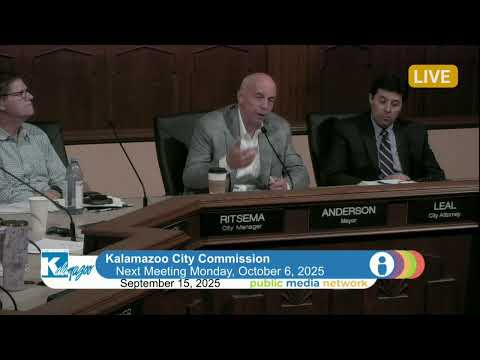
Kurt Artema, chair of the Central County Transportation Authority and Kalamazoo County Transportation Authority boards, told the Kalamazoo City Commission that Metro provided roughly 1,700,000 rides over the past year and is piloting on‑demand services to reach outer neighborhoods.
The update matters because Metro leaders say state funding to support transit is falling and local voters will see a proposed 1.1‑mill, five‑year millage on the Nov. 4 ballot for the urbanized area that includes City of Kalamazoo, Portage, Parchment and several townships. Artema said the millage request is intended to “maintain levels of service” amid unclear state and federal funding.
Artema described three transit products: Metrobus (fixed routes), MetroLink (a pilot on‑demand zone service similar to app‑based ride hailing) and Metro Connect (countywide on‑demand and medical trips). He said MetroLink has recorded about 81,000 rides since its April 2024 launch and averages roughly a 12‑minute pickup time; the program received part of a $2,000,000 grant from the Michigan Department of Transportation.
Metro’s system budgeted expenses for 2026 were shown at about $27.5 million. Artema said funding for operations is a mix of local millage, state and federal dollars, fares and partner contributions and that the percentage of state support returning to Metro has fallen from around 35% to about 26% for future planning.
Commissioners asked about community outreach, late‑night service and fare media. Artema said a campaign committee is leading millage outreach and Metro staff are conducting rider surveys and community meetings. On late‑night service, Artema said the board has discussed restoring later evening options and that some board members “would love to see that late night option” return. He said the card replacement policy has not changed and he will raise questions about replacing lost cards and language access at the next board meeting.
The presentation was an informational briefing; the commission took no formal vote on Metro policy or funding at the meeting.