Get Full Government Meeting Transcripts, Videos, & Alerts Forever!
Residents urge Surprise to end Flock Safety camera program, citing privacy and cost concerns
Summary
Multiple speakers during the public‑comment period urged the Surprise City Council to terminate the city’s contract with Flock Safety and remove surveillance cameras, citing alleged costs, data‑retention risks and examples from other Arizona cities.
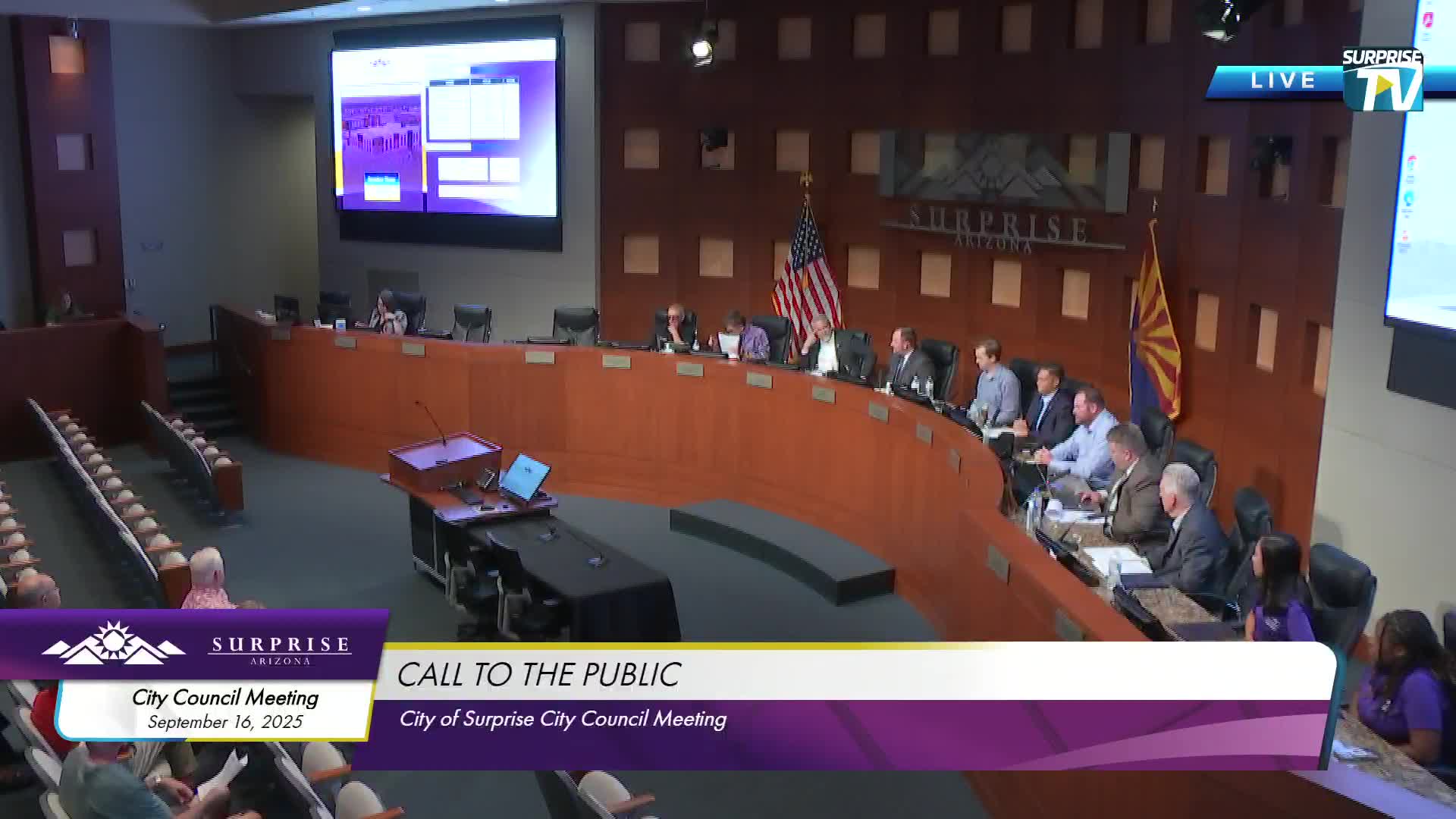
Several residents urged the Surprise City Council on Sept. 16 to end the city’s contract with Flock Safety and remove automated license‑plate reader cameras, arguing the system threatens privacy and is costly.
Nathan Madden, second vice chair of the Arizona Libertarian Party, asked the council to “immediately terminate the contract, surprise contract with Flock Safety and removal of all surveillance cameras from the community.” He told the council he believes the cameras…
Already have an account? Log in
Subscribe to keep reading
Unlock the rest of this article — and every article on Citizen Portal.
- Unlimited articles
- AI-powered breakdowns of topics, speakers, decisions, and budgets
- Instant alerts when your location has a new meeting
- Follow topics and more locations
- 1,000 AI Insights / month, plus AI Chat